

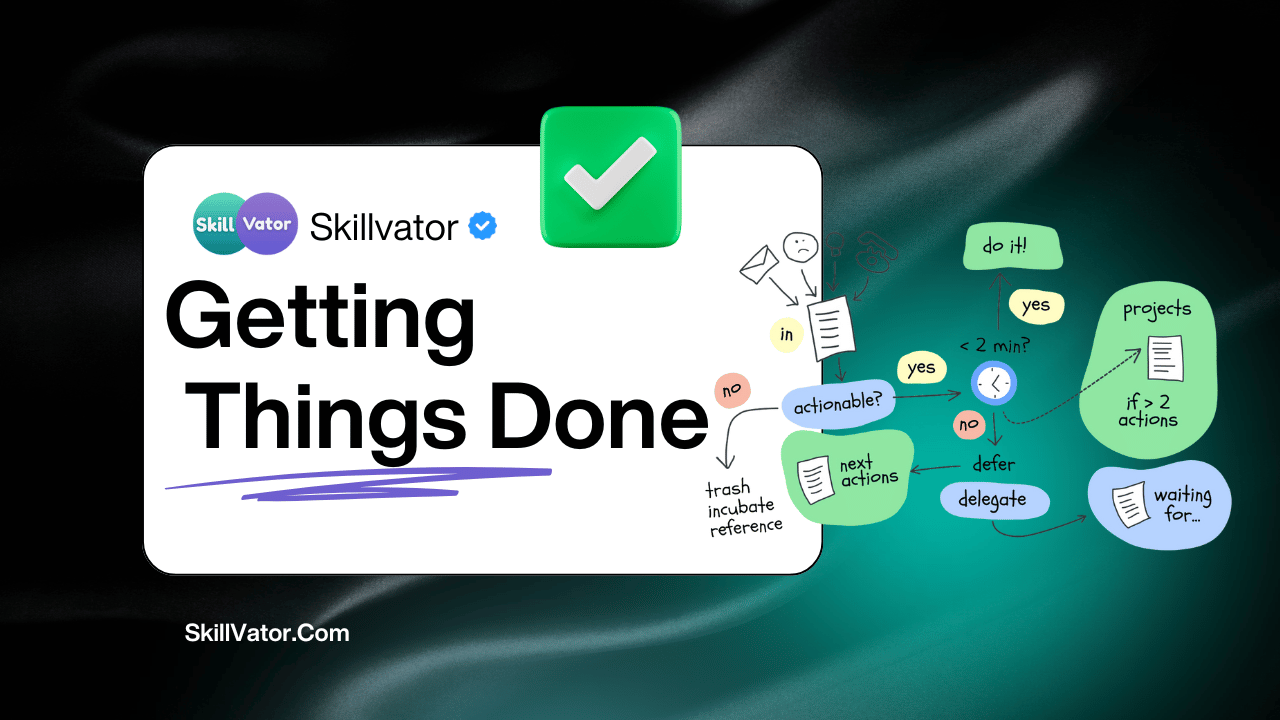
Learn how the Getting Things Done (GTD) system helps you master complex workflows, reduce mental clutter, and boost productivity. A complete GTD guide by Skillvator.
In a world filled with constant notifications, overlapping responsibilities, and endless to-do lists, productivity isn’t about doing more—it’s about doing the right things with clarity. This is exactly where the Getting Things Done (GTD) system stands out as one of the most effective productivity frameworks ever created.
If you’re a multitasker, knowledge worker, entrepreneur, or professional juggling complex workflows, the GTD method can fundamentally change how you work and think.
In this in-depth guide by Skillvator, we’ll break down what GTD is, how it works, why it’s effective, and how to apply it in real life—step by step.
What Is the Getting Things Done (GTD) System?
Getting Things Done (GTD) is a productivity methodology developed by David Allen, first introduced in his bestselling book Getting Things Done: The Art of Stress-Free Productivity.
At its core, GTD is based on one powerful principle:
Your mind is for having ideas, not holding them.
The GTD system helps you offload tasks, ideas, and commitments from your brain into a trusted external system, so you can focus fully on execution instead of remembering what to do.
Best For: Who Should Use the GTD Method?
The GTD system is especially effective for:
-
Professionals managing complex workflows
-
People handling multiple projects at once
-
Entrepreneurs and freelancers
-
Knowledge workers and creatives
-
Anyone feeling overwhelmed by mental clutter
If your to-do list feels chaotic or your brain feels constantly “full,” GTD is designed for you.
Core Idea of GTD: Get Tasks Out of Your Head
Most productivity problems come from open loops—unfinished tasks and unclear commitments floating in your mind.
GTD solves this by creating a clear, reliable system where:
-
Everything is captured
-
Every task is clarified
-
Priorities are visible
-
Focus becomes intentional
This is why GTD is considered one of the most mentally freeing productivity frameworks ever created.
The 5 Steps of the Getting Things Done (GTD) System
The GTD methodology is built around five clear, sequential steps.
1. Capture Everything
The first step is to capture absolutely everything that has your attention:
-
Tasks
-
Ideas
-
Emails
-
Meeting notes
-
Personal reminders
Nothing stays in your head.
Tools you can use:
-
Notes app
-
Task manager
-
Notebook
-
Voice notes
The goal is to create a trusted inbox where everything goes.
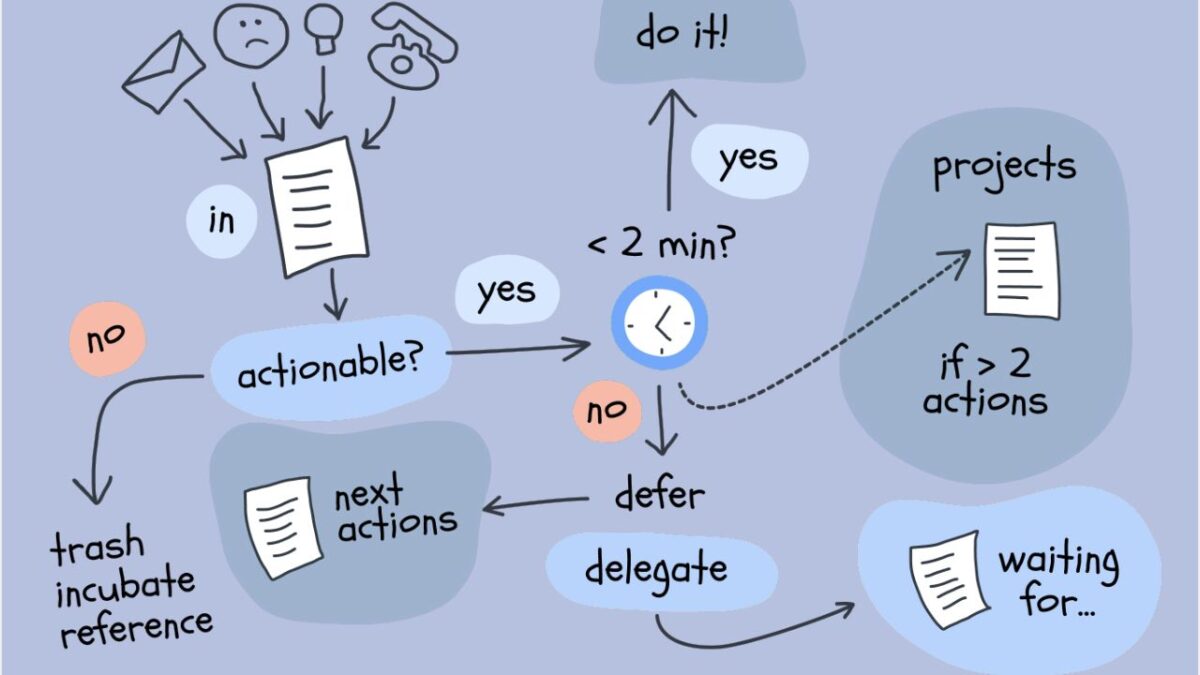
2. Clarify: Is It Actionable?
Once captured, you must clarify each item.
Ask:
-
Is this actionable?
-
If yes, what’s the next physical action?
-
If no, should it be:
-
Trash
-
Reference
-
Someday/Maybe
-
This step transforms vague thoughts into clear next steps.
3. Organize by Projects and Contexts
After clarification, tasks are organized into the right place.
Examples:
-
Projects (anything with more than one step)
-
Contexts (Work, Home, Calls, Computer)
-
Waiting For (tasks dependent on others)
-
Calendar (time-specific actions)
This structure ensures you always know what to work on and when.
4. Reflect: Weekly Reviews Are Critical
The weekly review is the backbone of GTD.
During a review, you:
-
Clean your inboxes
-
Review all projects
-
Update task lists
-
Reassess priorities
Without reflection, GTD breaks.
With reflection, it becomes powerful and sustainable.
5. Engage: Focus on What Matters Now
Finally, GTD helps you choose what to work on in the moment, based on:
-
Context
-
Available time
-
Energy level
-
Priority
This removes decision fatigue and increases execution quality.
GTD Workflow Summary Table
| GTD Step | Purpose | Outcome |
|---|---|---|
| Capture | Collect everything | Clear mind |
| Clarify | Define next actions | No ambiguity |
| Organize | Structure tasks | Easy retrieval |
| Reflect | Review regularly | System stays trusted |
| Engage | Execute intentionally | Higher productivity |
Why the GTD System Actually Works
The GTD system succeeds where many productivity methods fail because it addresses how the human brain works.
Key Benefits of GTD
-
Reduces mental overload
-
Improves focus and decision-making
-
Prevents missed tasks
-
Creates a sense of control
-
Scales with complexity
Unlike rigid systems, GTD adapts to any role or industry.
GTD vs Other Productivity Frameworks
If you’ve read our guide on
👉 10 Productivity Frameworks That Actually Work
you’ll notice that GTD stands out for workflow management, not time blocking.
| Framework | Best Use Case |
|---|---|
| GTD | Complex workflows |
| Pomodoro | Focus & deep work |
| Eisenhower Matrix | Prioritization |
| Time Blocking | Structured schedules |
GTD works best when combined with other methods, especially for execution.
Common Mistakes When Using GTD
Many people fail with GTD—not because it doesn’t work, but because they skip fundamentals.
Avoid These Errors:
-
Not capturing everything
-
Skipping weekly reviews
-
Overcomplicating tools
-
Mixing GTD with rigid schedules too early
Remember: simplicity builds trust in the system.
Tools That Work Well With GTD
You don’t need fancy tools, but these help:
The best tool is the one you actually use consistently.
How Skillvator Teaches GTD Differently
At Skillvator, we focus on practical productivity systems, not theory.
Our GTD approach emphasizes:
-
Real-world application
-
Career-aligned productivity
-
Sustainable habits
-
Reduced burnout
If you want to build productivity that supports long-term career growth, GTD is a foundational skill.
Frequently Asked Questions (FAQ)
What does GTD stand for in productivity?
GTD stands for Getting Things Done, a productivity system created by David Allen to manage tasks and reduce mental clutter.
Is GTD good for multitaskers?
Yes. GTD is one of the best productivity frameworks for multitaskers managing complex workflows.
How long does it take to implement GTD?
You can set up a basic GTD system in 1–2 days, but mastery comes with weekly reviews and practice.
Is GTD better than time blocking?
GTD and time blocking serve different purposes. GTD manages what to do, while time blocking manages when to do it.
Do I need special tools for GTD?
No. GTD works with simple tools like notebooks or advanced apps—what matters is consistency.
Trusted Sources & References
-
David Allen – Getting Things Done (Official Website)
https://gettingthingsdone.com
Harvard Business Review – Productivity & Task Management
https://hbr.org
-
Psychology Today – Cognitive Load & Task Management
https://www.psychologytoday.com
Final Thoughts: Is GTD Worth It?
If your productivity struggles come from mental overload, unclear priorities, or complex workflows, the Getting Things Done system is one of the most reliable solutions available.
GTD doesn’t just help you get things done—it helps you think clearly, work intentionally, and grow professionally.
At Skillvator, we believe mastering systems like GTD is a critical step toward true productivity and career growth.