


Learn how time blocking helps you design your ideal workday, improve focus, eliminate distractions, and boost productivity. A complete time blocking guide by Skillvator.
What if your workday didn’t feel chaotic, reactive, or exhausting?
What if instead of constantly switching tasks, responding to interruptions, and ending the day overwhelmed, you followed a clear, intentional plan that matched your energy, priorities, and goals?
That’s exactly what time blocking is designed to do.
In this in-depth guide by Skillvator, you’ll learn what time blocking is, why it works, how to implement it step by step, and how to design an ideal workday that actually supports productivity and career growth.

What Is Time Blocking?
Time blocking is a productivity method where you divide your day into dedicated blocks of time, each assigned to a specific task, project, or type of work.
Instead of working from an endless to-do list, you schedule your priorities directly into your calendar.
In simple terms:
-
To-do lists tell you what to do
-
Time blocking tells you when to do it
This shift dramatically improves focus and execution.
Best For: Who Should Use Time Blocking?
Time blocking is especially effective for:
-
Knowledge workers and professionals
-
Entrepreneurs and freelancers
-
Students managing deep work
-
Creators and writers
-
Anyone struggling with distractions or procrastination
If your day feels reactive rather than intentional, time blocking can change everything.

Core Idea of Time Blocking: Your Calendar Reflects Your Priorities
The core philosophy behind time blocking is powerful:
If it’s not on your calendar, it’s not a priority.
Time blocking forces you to confront reality:
-
You only have 24 hours
-
Focus is limited
-
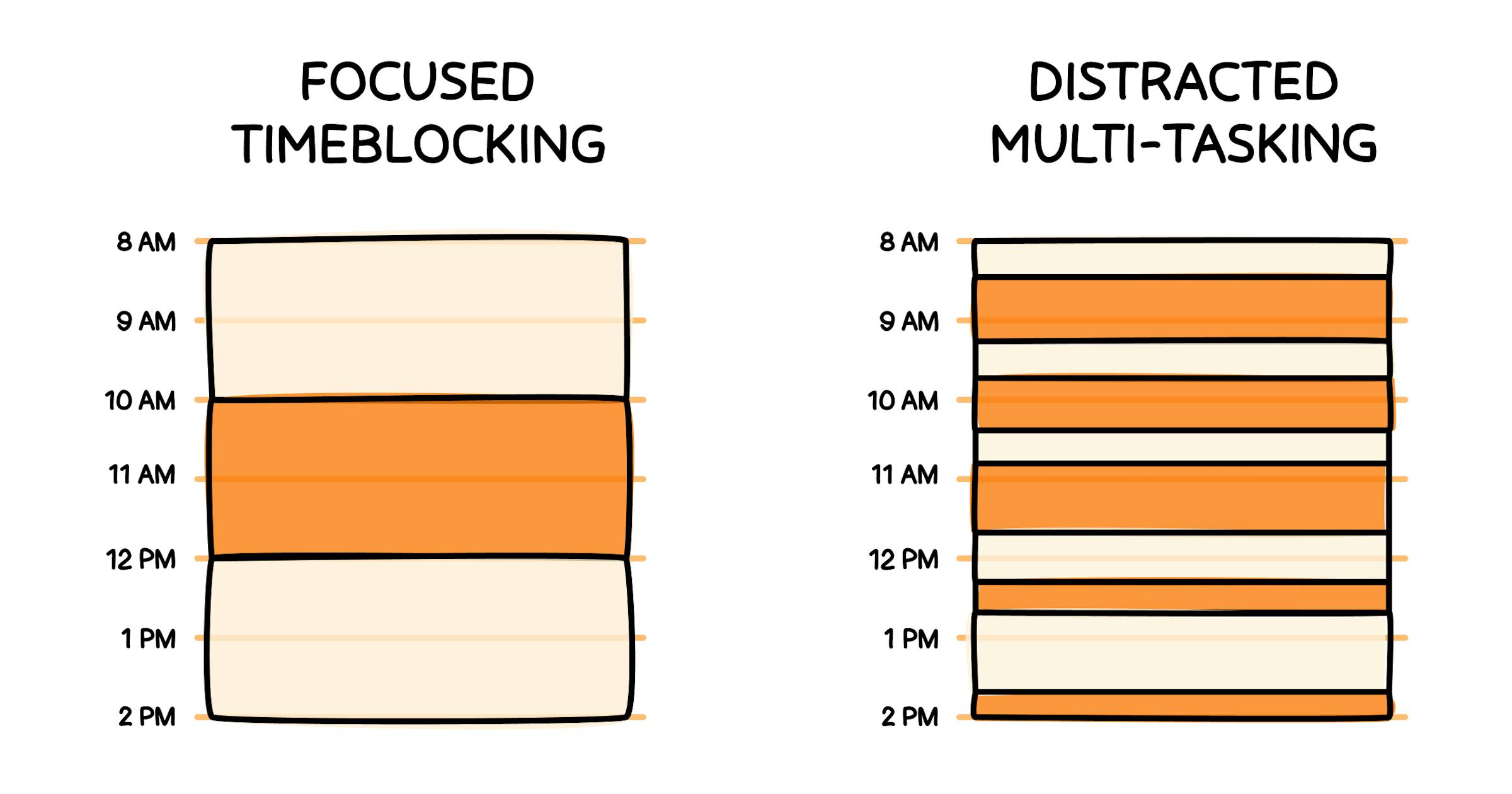
Multitasking reduces quality
By assigning time intentionally, you protect what matters most.
Why Time Blocking Actually Works
Time blocking is backed by both psychology and performance science.
Key Reasons Time Blocking Is Effective
-
Reduces decision fatigue
-
Minimizes context switching
-
Protects deep work time
-
Creates realistic expectations
-
Improves work-life balance
Instead of reacting to tasks, you execute with intention.
Time Blocking vs To-Do Lists
Traditional to-do lists often fail because they:
-
Are unrealistic
-
Don’t account for time
-
Encourage multitasking
-
Grow endlessly
| To-Do Lists | Time Blocking |
|---|---|
| Task-focused | Time-focused |
| Reactive | Proactive |
| Easy to ignore | Hard to avoid |
| Encourages overload | Enforces limits |
Time blocking turns plans into commitments.
Types of Time Blocking (Choose What Fits You)
Time blocking isn’t one-size-fits-all. Here are the most common variations:
1. Task-Based Time Blocking
Each block is assigned to a specific task.
-
Example: 9:00–10:30 → Write blog post
Best for structured workdays.
2. Theme-Based Time Blocking
Blocks are assigned to categories of work.
-
Example: Monday mornings → Content creation
Best for leaders and creatives.
3. Energy-Based Time Blocking
Work is scheduled based on energy levels.
-
Deep work in the morning
-
Admin tasks in the afternoon
Best for sustainable productivity.
How to Design Your Ideal Workday with Time Blocking (Step by Step)
Step 1: Identify Your Priorities
Start by identifying:
-
High-impact tasks
-
Deep work activities
-
Personal commitments
If you’ve defined goals using
👉 OKRs (Objectives & Key Results)
your priorities should align directly with them.
Step 2: Estimate Time Realistically
Most people underestimate how long tasks take.
Rule of thumb:
-
Add a 25–30% buffer
-
Assume interruptions will happen
Realistic plans are more likely to succeed.
Step 3: Block Time on Your Calendar
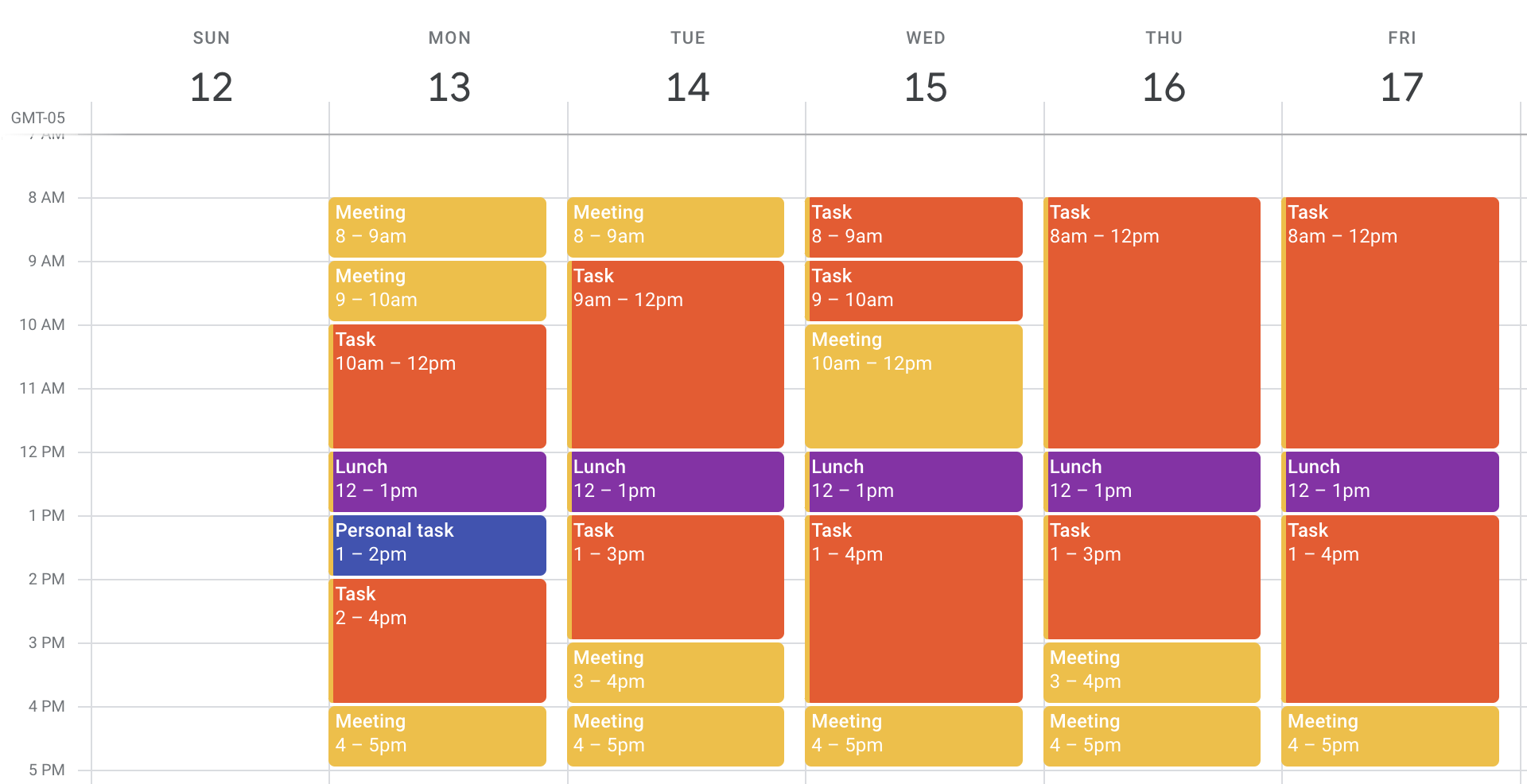
Use your calendar as your single source of truth.
Include:
-
Work blocks
-
Breaks
-
Meetings
-
Personal time
If it matters, block it.
Step 4: Protect Deep Work Blocks
Deep work is where real progress happens.
Schedule deep work during:
-
Peak energy hours
-
Low-interruption periods
Pair this with techniques like
👉 Pomodoro
for even better focus.
Step 5: Review and Adjust Daily
Time blocking is flexible, not rigid.
At the end of each day:
-
Review what worked
-
Adjust future blocks
-
Learn from patterns
Sample Time-Blocked Workday (Table)
| Time | Activity |
|---|---|
| 8:00–9:00 | Morning routine & planning |
| 9:00–11:00 | Deep work (high-priority project) |
| 11:00–11:30 | Emails & messages |
| 11:30–1:00 | Meetings / collaboration |
| 1:00–2:00 | Break & personal time |
| 2:00–4:00 | Shallow work / admin |
| 4:00–5:00 | Review & planning |
Time Blocking and Other Productivity Systems
Time blocking works best when combined with other frameworks:
Think of time blocking as the execution layer of productivity.
Common Mistakes to Avoid with Time Blocking
Many people quit time blocking because of avoidable mistakes.
Avoid These Errors:
-
Overpacking your schedule
-
Not blocking breaks
-
Treating blocks as unchangeable
-
Ignoring energy levels
Time blocking should support you—not stress you.
Tools That Work Well for Time Blocking
You don’t need complex tools.
Popular options include:
The best tool is the one you check daily.
How Skillvator Recommends Using Time Blocking
At Skillvator, we teach time blocking as a career-supporting system, not just a scheduling trick.
Our approach emphasizes:
-
Alignment with long-term goals
-
Sustainable energy management
-
Focus over busyness
-
Flexibility over perfection
Time blocking helps you design a workday that actually reflects your priorities.
Frequently Asked Questions (FAQ)
What is time blocking in productivity?
Time blocking is a method of scheduling tasks into dedicated time slots on your calendar to improve focus and execution.
Is time blocking good for multitaskers?
Yes. Time blocking reduces multitasking by forcing single-task focus.
How long should time blocks be?
Most blocks work best between 60–120 minutes, depending on task complexity.
What if my schedule changes?
Adjust your blocks. Time blocking is meant to be flexible, not rigid.
Is time blocking better than Pomodoro?
They serve different purposes. Time blocking plans when to work, Pomodoro manages how you work.
Trusted Sources & References
Final Thoughts: Design a Workday That Works for You
Time blocking isn’t about controlling every minute—it’s about designing your day intentionally.
When used correctly, time blocking helps you:
-
Focus deeply
-
Reduce overwhelm
-
Execute priorities
-
Protect personal time
-
Build sustainable productivity
At Skillvator, we believe time blocking is one of the most practical skills for anyone serious about productivity and career growth.


Does time blocking work well for creative roles where tasks don’t always have fixed durations?
Time blocking has always felt complicated to me, but this guide explains it in a very simple and practical way.
I like the examples provided here. They make it much easier to visualize how to structure a day using time blocks.