

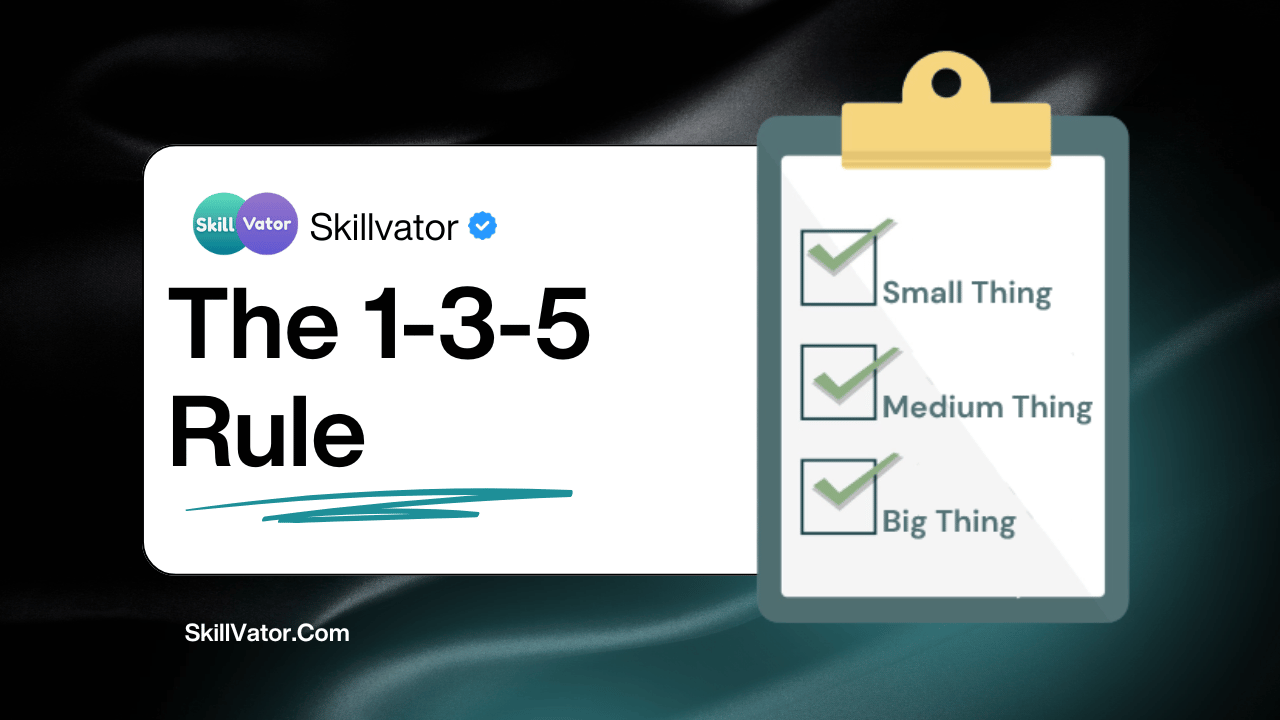
Learn how the 1-3-5 Rule helps you structure your day, prioritize tasks, and achieve real results without overwhelm. A complete productivity guide by Skillvator.
Most people don’t fail at productivity because they’re lazy.
They fail because they plan too much and execute too little.
Long to-do lists, unrealistic schedules, and constant task switching create the illusion of productivity—while real progress stays minimal.
This is where one of the simplest and most effective daily planning systems comes in:
👉 The 1-3-5 Rule
At Skillvator, we teach the 1-3-5 Rule as a daily execution framework—especially for people who want structure, clarity, and real results without burnout.
In this comprehensive guide, you’ll learn what the 1-3-5 Rule is, how it works, why it’s effective, and how to apply it in real life to structure your day properly.

What Is the 1-3-5 Rule?
The 1-3-5 Rule is a simple productivity method for daily task planning.
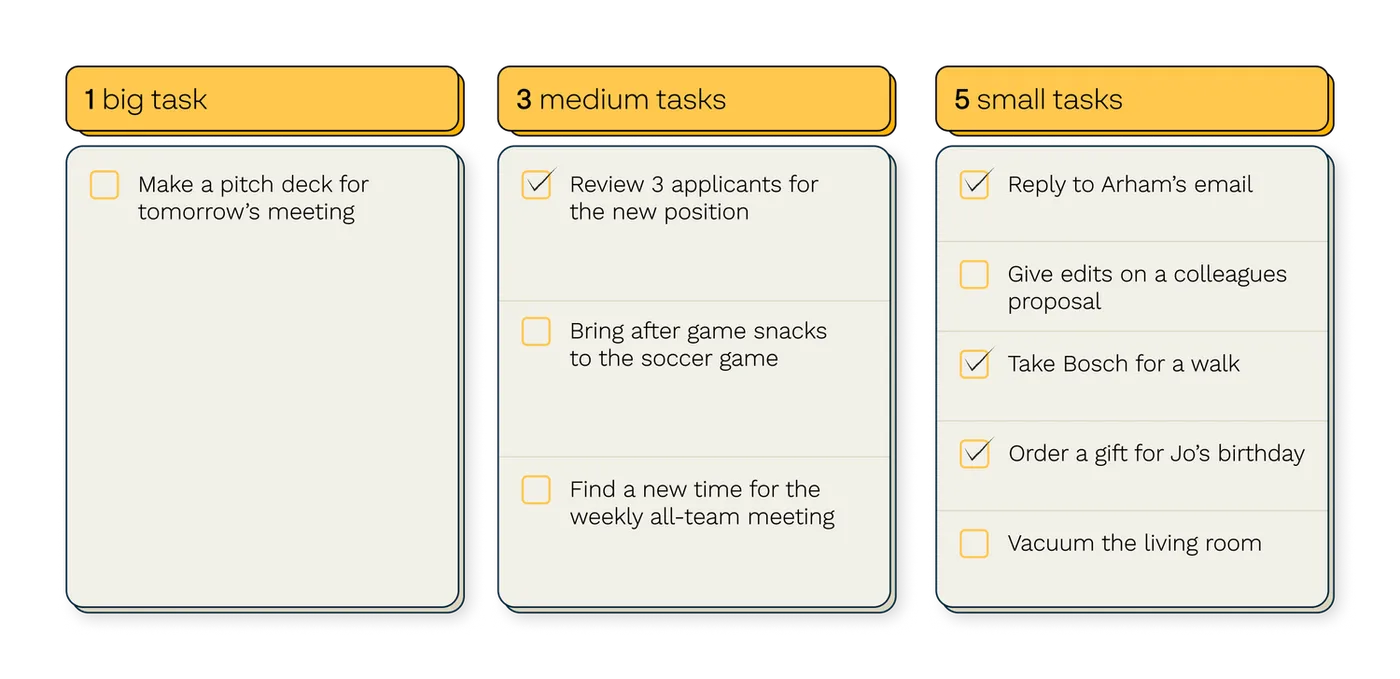
It states that on any given day, you should aim to complete:
-
1 big task
-
3 medium tasks
-
5 small tasks
That’s it.
Instead of overwhelming yourself with dozens of tasks, the 1-3-5 Rule creates a realistic workload that aligns with how much meaningful work you can actually do in one day.
Best For: Who Should Use the 1-3-5 Rule?
The 1-3-5 Rule works especially well for:
-
Professionals overwhelmed by long to-do lists
-
Knowledge workers and managers
-
Students balancing multiple responsibilities
-
Entrepreneurs and freelancers
-
Anyone who wants structure without complexity
If you often end the day feeling busy but unaccomplished, this rule is designed for you.
Core Idea of the 1-3-5 Rule: Less Planning, Better Execution
The philosophy behind the 1-3-5 Rule is simple:
You can’t do everything in one day—but you can do the right things.
Most people overestimate their daily capacity. The 1-3-5 Rule fixes this by:
-
Limiting daily commitments
-
Forcing prioritization
-
Encouraging completion over accumulation
How the 1-3-5 Rule Works (Step by Step)
Step 1: Choose One Big Task
Your 1 big task is the most important, high-impact activity of the day.
Examples:
-
Writing a blog post
-
Completing a project milestone
-
Preparing a presentation
-
Deep work on a core skill
If you’re using
👉 OKRs (Objectives & Key Results)
your big task should directly support your main objective.
Step 2: Select Three Medium Tasks
Your 3 medium tasks support progress but require less effort than the big task.
Examples:
-
Editing content
-
Reviewing reports
-
Client follow-ups
-
Planning sessions
These tasks move work forward without draining all your energy.
Step 3: Add Five Small Tasks
Your 5 small tasks are quick wins.
Examples:
-
Responding to emails
-
Scheduling meetings
-
Organizing files
-
Updating notes
These tasks reduce mental clutter and create momentum.
1-3-5 Rule Task Breakdown Table
| Task Type | Number | Description | Examples |
|---|---|---|---|
| Big Task | 1 | High-impact, deep work | Write article, build feature |
| Medium Tasks | 3 | Supportive, moderate effort | Review, planning, edits |
| Small Tasks | 5 | Quick, low-effort | Emails, admin, updates |
Why the 1-3-5 Rule Actually Works
The 1-3-5 Rule works because it respects human limits.
1. It Prevents Overplanning
Instead of unrealistic lists, you commit to what’s achievable.
2. It Forces Prioritization
You must decide:
-
What really matters today?
-
What can wait?
This clarity improves decision-making.
3. It Balances Energy Levels
Deep work, moderate work, and light tasks are naturally balanced.
4. It Creates a Sense of Completion
Finishing all 9 tasks creates motivation and confidence.
1-3-5 Rule vs Traditional To-Do Lists
Traditional to-do lists often create pressure instead of progress.
| To-Do Lists | 1-3-5 Rule |
|---|---|
| Unlimited tasks | Clear limits |
| Overwhelming | Manageable |
| Focus on quantity | Focus on impact |
| Encourages multitasking | Encourages completion |
How the 1-3-5 Rule Fits Into Productivity Systems
The 1-3-5 Rule works best when combined with other frameworks.
1-3-5 Rule + Ivy Lee Method
-
Ivy Lee defines what matters most
-
1-3-5 structures the entire day
1-3-5 Rule + Time Blocking
Use Time Blocking
to schedule your 1-3-5 tasks into your calendar for execution.
1-3-5 Rule + GTD
-
GTD captures everything
-
1-3-5 selects what to do today
Sample 1-3-5 Rule Day (Table)
| Priority Level | Task |
|---|---|
| Big Task (1) | Write long-form blog article |
| Medium Task (1) | Edit previous post |
| Medium Task (2) | Research next topic |
| Medium Task (3) | Content planning |
| Small Task (1) | Reply to emails |
| Small Task (2) | Schedule meeting |
| Small Task (3) | Update notes |
| Small Task (4) | File documents |
| Small Task (5) | Review calendar |
Common Mistakes to Avoid with the 1-3-5 Rule
Avoid These Errors:
-
Turning medium tasks into big ones
-
Choosing easy tasks as your “big task”
-
Ignoring unfinished tasks the next day
-
Overcomplicating the system
Remember: clarity comes from limits.
Skillvator Tip: Plan Your 1-3-5 List the Night Before 🌙
Skillvator Tip:
Create your 1-3-5 task list the night before.
This removes morning decision fatigue and creates instant focus.
This habit alone dramatically improves consistency.
Frequently Asked Questions (FAQ)
What is the 1-3-5 Rule in productivity?
The 1-3-5 Rule is a daily planning method where you complete 1 big task, 3 medium tasks, and 5 small tasks per day.
Is the 1-3-5 Rule better than a to-do list?
Yes, because it limits tasks, forces prioritization, and improves completion rates.
Can the 1-3-5 Rule be used every day?
Yes. It’s designed for daily use and long-term sustainability.
What if I don’t finish all tasks?
Move unfinished tasks to the next day and re-prioritize.
Who should avoid the 1-3-5 Rule?
People with highly reactive roles should combine it with flexible systems like GTD.
Trusted Sources & References
Psychology Today – Cognitive Load & Productivity
Cal Newport – Deep Work & Focus
Final Thoughts: Structure Creates Freedom
The 1-3-5 Rule proves that productivity isn’t about doing more—it’s about doing what matters most.
By structuring your day intentionally, this method helps you:
-
Reduce overwhelm
-
Increase focus
-
Execute priorities
-
End the day with real progress
At Skillvator, we believe the 1-3-5 Rule is one of the most practical productivity skills for anyone serious about career growth and sustainable performance.

The 1-3-5 rule feels very realistic compared to long to-do lists. I’m definitely going to try this approach.
Does this method work well for people who have unpredictable workdays?