

Learn what deep work is, why it matters, and how to master deep work to improve focus, productivity, and career growth. A complete deep work guide by Skillvator.
In a world of constant notifications, endless meetings, and shallow multitasking, the ability to focus deeply has become a rare and valuable skill.
Yet, nearly all high-impact work—creative breakthroughs, complex problem-solving, skill mastery, and meaningful progress—comes from one source:
👉 Deep work
At Skillvator, we treat deep work as the practical application of focus. If focus is the skill, deep work is how that skill produces real-world results.
In this guide, you’ll learn what deep work is, why it’s essential for high performers, and how to build a deep work practice that actually works in modern life.
What Is Deep Work?
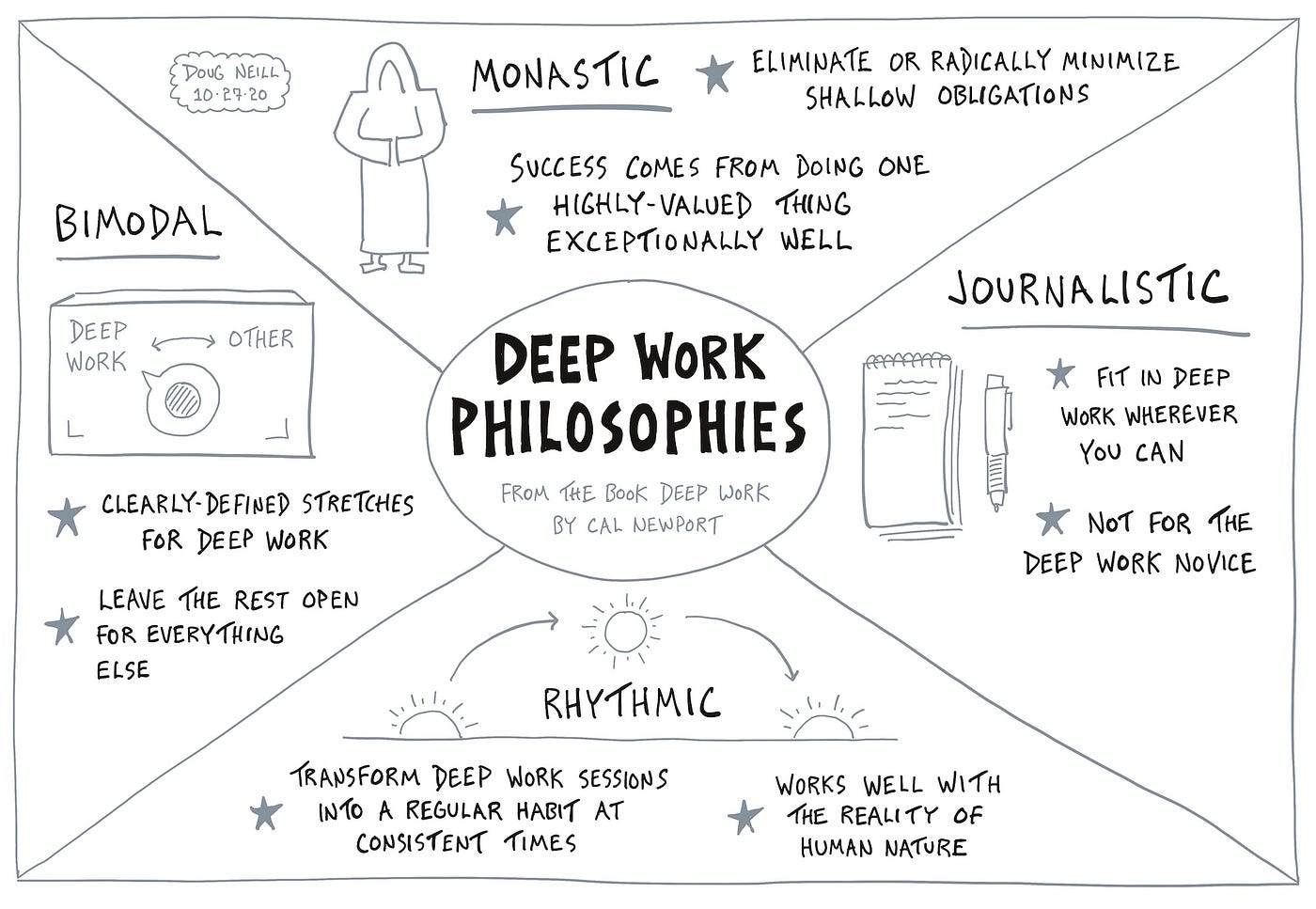
Deep work is a term popularized by Cal Newport, defined as:
“Professional activities performed in a state of distraction-free concentration that push your cognitive capabilities to their limit.”
In simple terms:
-
Deep work = focused, meaningful, high-value work
-
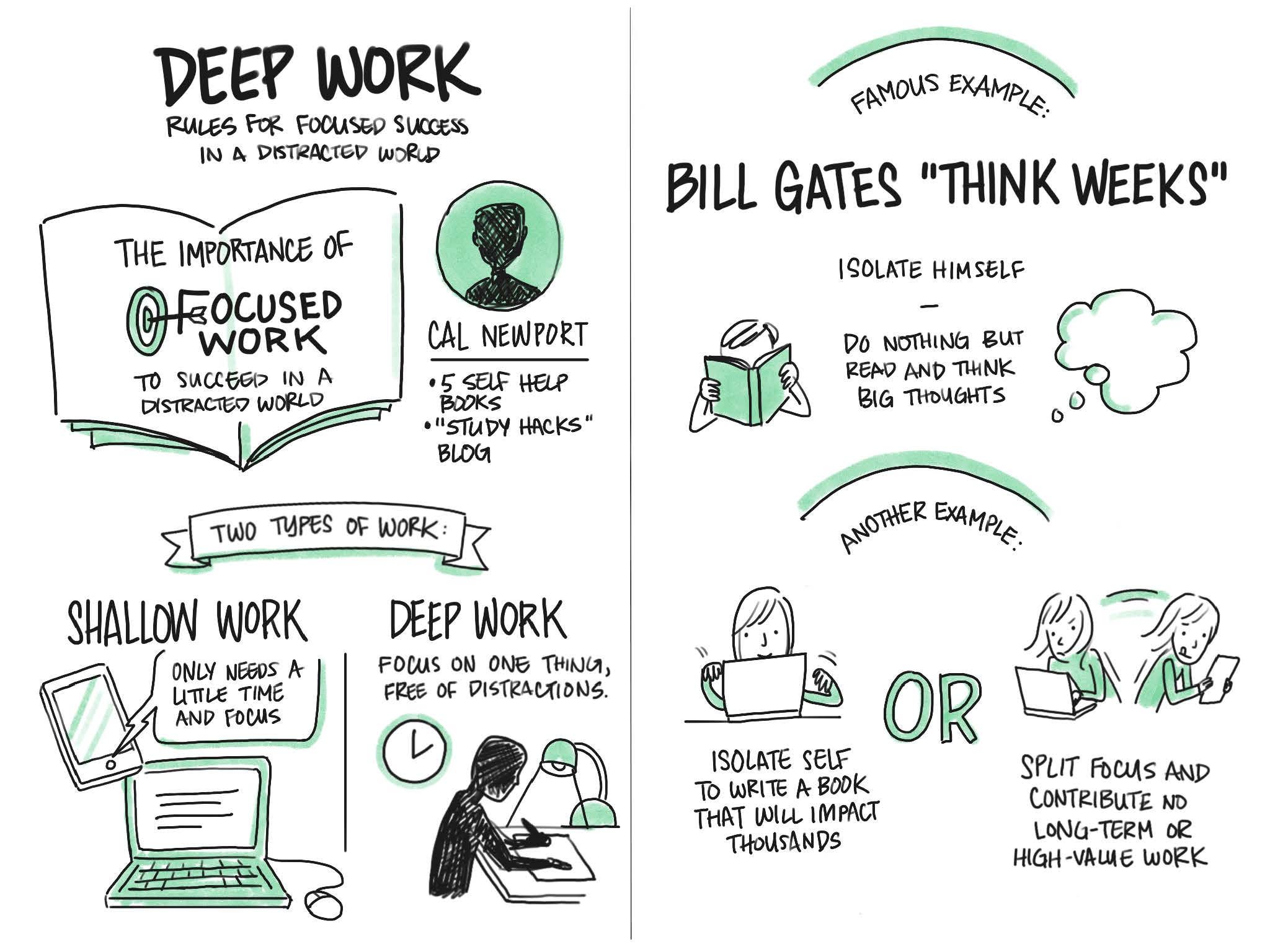
Shallow work = reactive, low-value, easily replaceable tasks
Deep work is where real progress happens.
Why Deep Work Is So Powerful (And So Rare)
Deep work is powerful because it allows you to:
-
Learn complex skills faster
-
Produce higher-quality output
-
Solve difficult problems
-
Create original ideas
Yet it’s rare because modern work environments reward:
-
Busyness over results
-
Speed over depth
-
Responsiveness over thinking
High performers win because they opt out of shallow work culture.
Deep Work vs Shallow Work (Critical Difference)
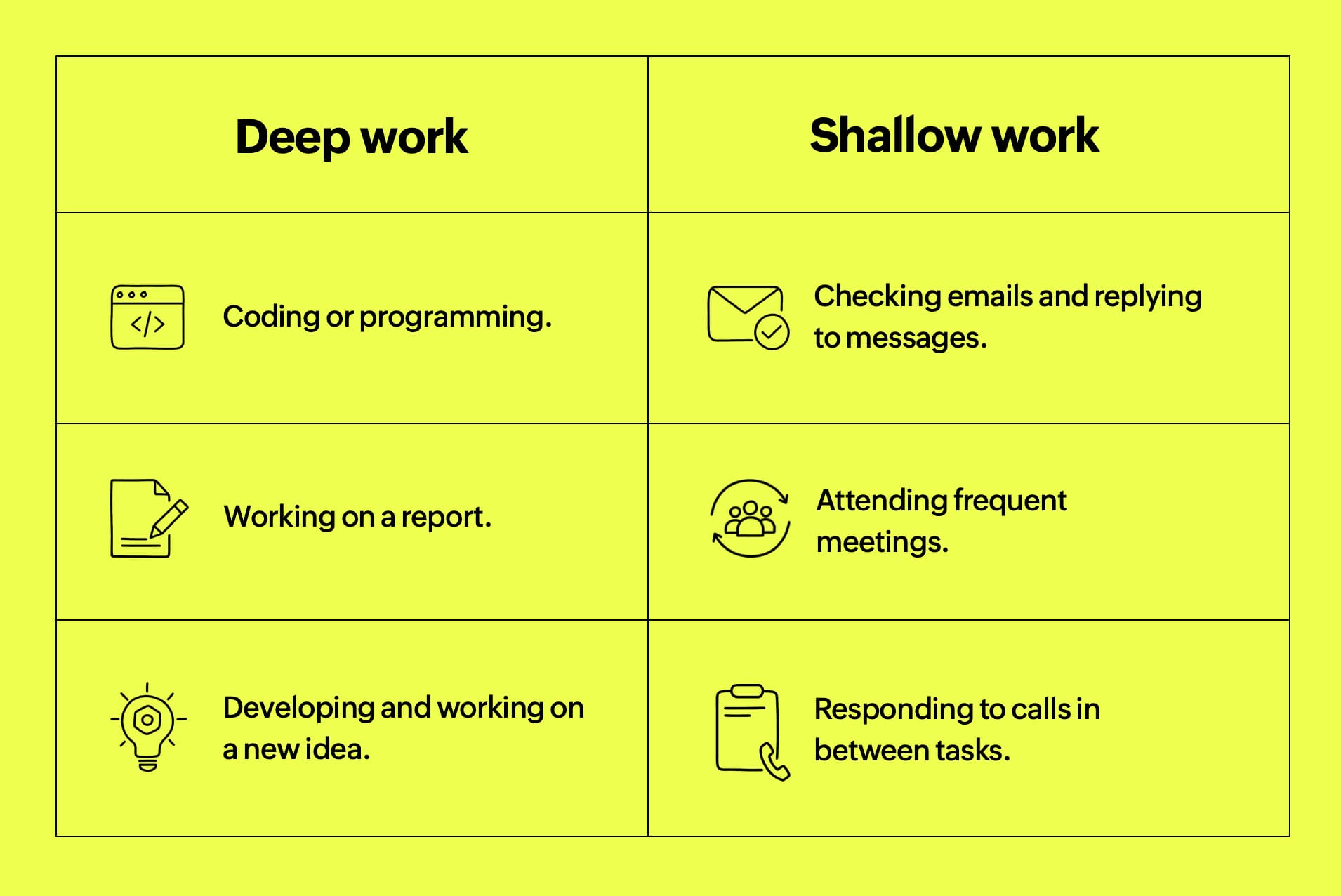
| Deep Work | Shallow Work |
|---|---|
| Requires full focus | Easily interrupted |
| Creates long-term value | Creates short-term activity |
| Mentally demanding | Low cognitive effort |
| Drives career growth | Maintains status quo |
Most people spend their days busy.
High performers spend their days deep.
The Science Behind Deep Work
Deep work is backed by neuroscience.
When you focus deeply:
-
Neural pathways strengthen (myelination)
-
Learning accelerates
-
Attention control improves
-
Cognitive fatigue decreases over time
This directly supports what we explained in
👉 The Science of Focus
Deep work is focus in action.
Why Deep Work Is a Career Superpower
In nearly every industry:
-
Hard problems = high value
-
Easy tasks = low value
Deep work allows you to:
-
Become harder to replace
-
Build rare and valuable skills
-
Produce work that stands out
This aligns with the 80/20 Rule:
👉 The 80/20 Rule
A small amount of deep work creates most visible results.
9 Powerful Deep Work Strategies Used by High Performers
Let’s break down how high performers actually practice deep work.
1. They Schedule Deep Work (Not “Find Time”)
Deep work doesn’t happen accidentally.
High performers block it on their calendar using:
👉Time Blocking
👉 Time Blocking vs Task Batching
-
Same time each day if possible
-
Treated as a non-negotiable meeting
-
Protected from interruptions
2. They Limit Deep Work to 1–4 Hours Per Day
More is not better.
Research shows most people can handle:
-
1–4 hours of deep work per day
-
Beyond that, quality drops sharply
Deep work is intense by design.
3. They Define a Clear Outcome Before Starting
Vague focus leads to shallow effort.
Before starting deep work, define:
-
One clear objective
-
One meaningful outcome
This mirrors the Ivy Lee Method:
👉 The Ivy Lee Method
4. They Eliminate Distractions at the Source
High performers don’t rely on willpower.
They remove:
-
Notifications
-
Open tabs
-
Phone access
-
Email during deep work
Environment beats motivation.
5. They Work on One Thing Only
Multitasking destroys depth.
Deep work requires:
-
Single-task focus
-
Full cognitive engagement
This is why systems like the
👉 1-3-5 Rule
and Ivy Lee Method work so well.
6. They Start Even When Motivation Is Low
Starting is the hardest part.
High performers use:
👉 The 2-Minute Rule
Once started, focus often follows.
7. They Track Deep Work, Not Hours Worked
They measure:
-
Sessions completed
-
Outcomes produced
-
Skills improved
Not time spent “online.”
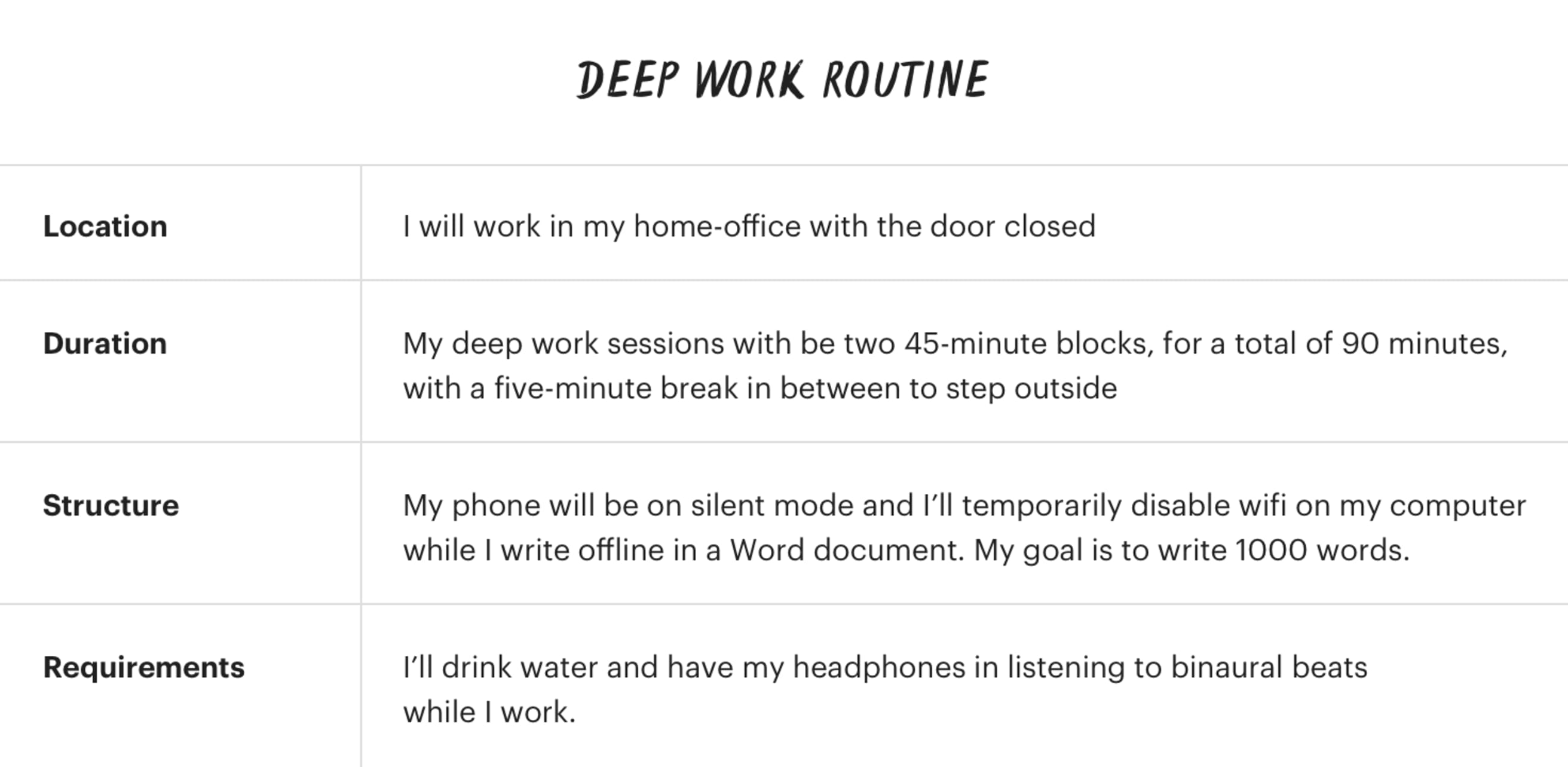
8. They Build Rituals Around Deep Work
Rituals reduce resistance.
Examples:
-
Same location
-
Same music
-
Same pre-work routine
This trains the brain to enter focus faster.
9. They End Deep Work With Reflection
High performers ask:
-
What worked?
-
What distracted me?
-
How can I improve tomorrow?
Reflection sharpens future focus.
Sample Deep Work Schedule (Table)
| Time | Activity |
|---|---|
| 8:30–9:00 | Preparation & planning |
| 9:00–10:30 | Deep work block #1 |
| 10:30–10:45 | Break |
| 11:00–12:00 | Deep work block #2 |
| Afternoon | Shallow work & meetings |
Deep Work + Productivity Systems (How They Fit Together)
Deep work works best when combined with structure.
-
GTD → captures tasks
-
80/20 Rule → identifies what matters
-
Time Blocking → schedules focus
-
Deep Work → executes at a high level
This is the system Skillvator teaches: clarity → focus → execution.
Common Deep Work Mistakes to Avoid
Avoid These:
-
Trying to do deep work all day
-
Not defining a clear goal
-
Allowing “quick checks”
-
Treating deep work as optional
Deep work must be protected, not squeezed in.
Skillvator Tip: Treat Deep Work Like Training 🧠
Skillvator Tip:
Think of deep work like mental training.
Start small, stay consistent, and increase intensity gradually.
Focus strengthens with repetition.
Frequently Asked Questions (FAQ)
What is deep work in productivity?
Deep work is focused, distraction-free work that creates high value and requires full cognitive effort.
How many hours of deep work per day is ideal?
Most people perform best with 1–4 hours of deep work daily.
Is deep work realistic in a busy job?
Yes—but it requires intentional scheduling and boundary-setting.
Can deep work improve learning speed?
Yes. Deep work accelerates skill acquisition and retention.
Is deep work better than multitasking?
Absolutely. Multitasking reduces quality and efficiency.
Trusted Sources & Research
Harvard Business Review – Focus & Productivity
American Psychological Association – Multitasking
Final Thoughts: Deep Work Is the New Competitive Advantage
In a distracted world, focus is rare.
And deep work turns focus into real results.
By mastering deep work, you can:
-
Produce higher-quality output
-
Learn faster
-
Reduce burnout
-
Accelerate career growth
At Skillvator, we believe deep work is not optional—it’s essential for high performance.