

Learn how OKRs (Objectives and Key Results) help individuals and teams align goals with action, improve productivity, and measure success. A complete OKR guide by Skillvator.
Setting goals is easy. Achieving them is not.
Many individuals and teams fail not because they lack ambition, but because their goals are vague, disconnected from daily work, and impossible to measure. This is where OKRs (Objectives & Key Results) come in—a proven goal-setting framework used by some of the world’s most successful organizations.
At Skillvator, we view OKRs as a bridge between clarity and execution. In this comprehensive guide, you’ll learn what OKRs are, how they work, why they’re effective, and how to implement them in real life
What Are OKRs (Objectives & Key Results)?
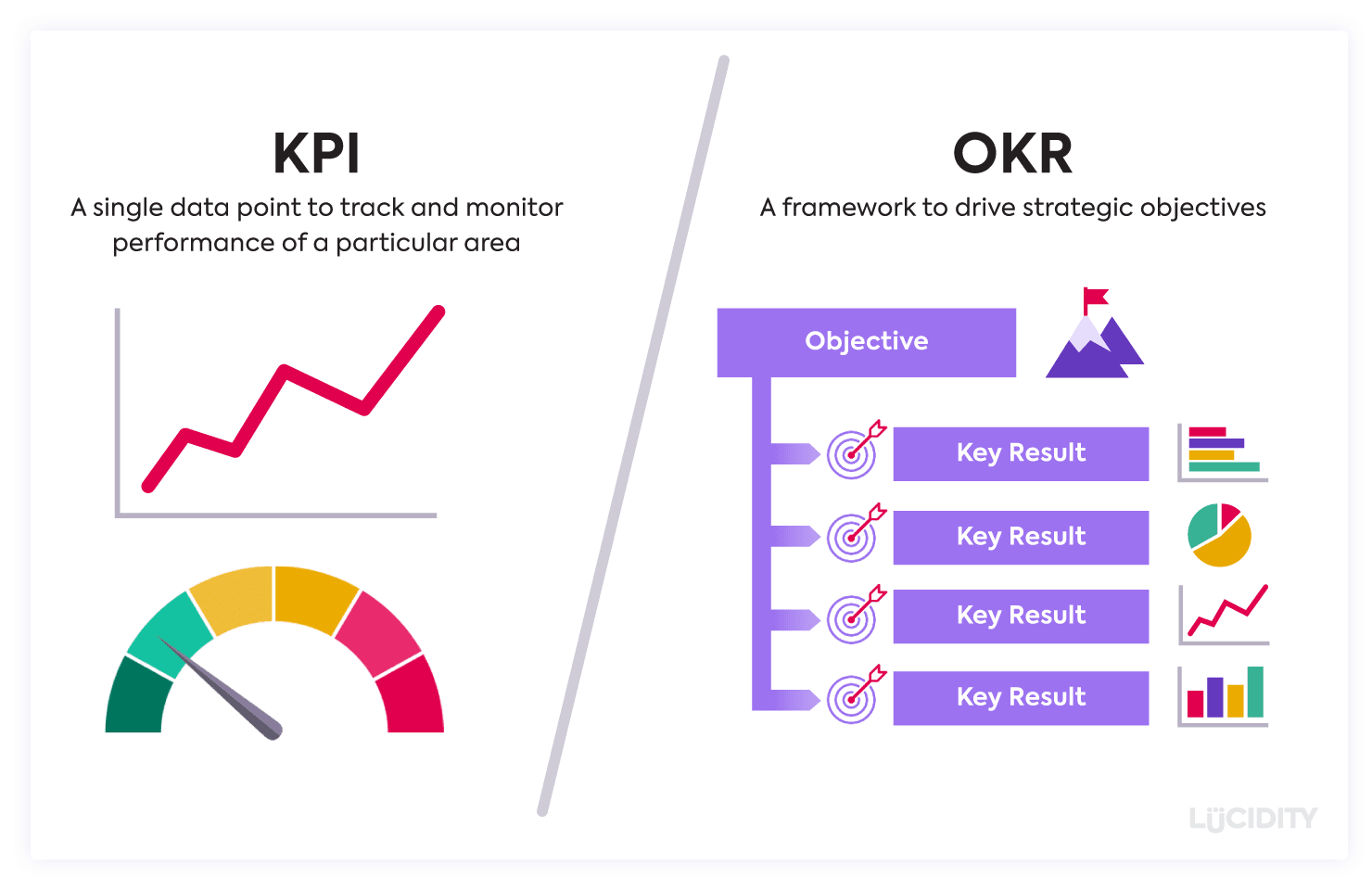
OKRs stand for Objectives and Key Results—a goal-setting framework that aligns what you want to achieve with how you’ll measure success.
The system was popularized by Andy Grove at Intel and later adopted by companies like Google, LinkedIn, and Spotify.
At its core, OKRs answer two fundamental questions:
-
Objective: What do I want to achieve?
-
Key Results: How will I know I’ve achieved it?
Best For: Who Should Use OKRs?
OKRs work exceptionally well for:
-
Teams and organizations
-
Startups and fast-growing companies
-
Managers and leaders
-
Individuals pursuing ambitious goals
-
Anyone seeking alignment between goals and daily actions
If you struggle with execution, accountability, or measuring progress, OKRs are built for you.
Core Idea of OKRs: Focus + Measurement = Execution
The power of OKRs lies in their simplicity:
Ambitious goals without measurable outcomes are just wishes.
OKRs force clarity by ensuring that every objective is supported by clear, trackable key results. This keeps goals actionable rather than abstract.
The Structure of OKRs Explained
1. Objective: What You Want to Achieve
An Objective is a clear, inspiring, and qualitative statement of direction.
Good objectives are:
-
Ambitious but achievable
-
Easy to understand
-
Outcome-focused
-
Motivating
Examples of strong objectives:
-
Improve team productivity
-
Deliver an outstanding customer experience
-
Build a high-performing content system
Objectives answer the “why”.
2. Key Results: How You Measure Success
Key Results are quantitative, specific, and measurable outcomes that define success.
Each objective typically has 3–5 key results.
Good key results are:
-
Measurable
-
Time-bound
-
Outcome-based (not tasks)
Key results answer the “how do we know?”.
OKR Example: Aligning Goals with Action
Let’s look at a practical OKR example.
Objective: Improve Team Productivity
Key Results:
-
Complete 90% of sprint tasks on time
-
Reduce average meeting time by 25%
-
Launch a new workflow system by the end of the quarter
This OKR works because:
-
The objective is clear and motivating
-
Each key result is measurable
-
Progress can be tracked weekly
OKRs vs Traditional Goal Setting
Traditional goals often fail due to lack of clarity and follow-through.
| Traditional Goals | OKRs |
|---|---|
| Vague | Specific |
| Hard to measure | Measurable |
| Activity-focused | Outcome-focused |
| Static | Reviewed regularly |
OKRs create a feedback loop that keeps goals alive throughout the execution cycle.
Why OKRs Actually Work
OKRs are effective because they align strategy, execution, and measurement.
Key Benefits of OKRs
-
Clear priorities
-
Better alignment across teams
-
Increased accountability
-
Focus on outcomes, not busywork
-
Faster decision-making
This is why OKRs are widely used in high-performance environments.
OKRs and Productivity Systems
If you’ve read our article
👉 10 Productivity Frameworks That Actually Work
you’ll notice that OKRs complement execution systems like:
OKRs define what matters most, while other systems handle how the work gets done.
How to Implement OKRs Step by Step
Step 1: Set 1–3 Objectives
Avoid overload. Focus drives results.
Step 2: Define 3–5 Key Results per Objective
Each should be measurable and outcome-driven.
Step 3: Track Progress Regularly
Weekly check-ins work best.
Step 4: Score and Reflect
Most OKR systems score results from 0.0 to 1.0.
Step 5: Learn and Adjust
OKRs are not about perfection—they’re about progress.
Common Mistakes to Avoid with OKRs
Many teams fail with OKRs due to misuse.
Avoid These Errors:
-
Turning tasks into key results
-
Setting too many objectives
-
Linking OKRs directly to compensation
-
Ignoring regular reviews
OKRs thrive on transparency and learning, not pressure.
Individual OKRs vs Team OKRs
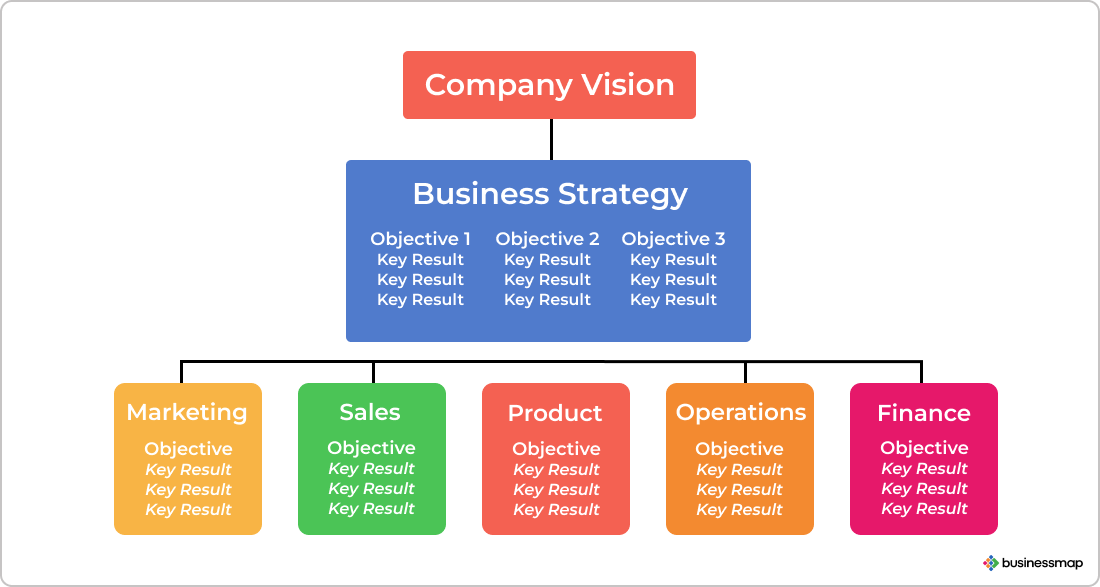
OKRs work at multiple levels.
| Type | Example |
|---|---|
| Individual | Improve personal productivity |
| Team | Increase sprint efficiency |
| Company | Expand market reach |
Alignment across levels creates organizational clarity.
Tools Commonly Used for OKRs
The tool matters less than consistent review.
How Skillvator Approaches OKRs
At Skillvator, we teach OKRs as a practical execution framework, not a corporate ritual.
Our OKR philosophy focuses on:
-
Clarity over complexity
-
Learning over pressure
-
Execution over planning
-
Alignment with career growth
When used correctly, OKRs turn ambition into measurable progress.
Frequently Asked Questions (FAQ)
What does OKR stand for?
OKR stands for Objectives and Key Results.
How many OKRs should I have?
Ideally 1–3 objectives at a time, each with 3–5 key results.
Are OKRs only for companies?
No. OKRs work extremely well for individuals, students, and freelancers.
How often should OKRs be reviewed?
Weekly check-ins and quarterly reviews are most effective.
Are OKRs better than to-do lists?
OKRs define what matters. To-do lists define what to do. They work best together.
Trusted Sources & References
Measure What Matters – John Doerr
Harvard Business Review – Goal Setting & OKRs
Final Thoughts: Why OKRs Matter
OKRs succeed because they connect ambition to action.
By clearly defining what success looks like and measuring progress consistently, OKRs help individuals and teams:
-
Focus on what truly matters
-
Execute with clarity
-
Learn faster
-
Achieve meaningful results
At Skillvator, we believe mastering OKRs is a critical skill for productivity, leadership, and long-term career growth.