
In a world full of constant pings, alerts, and distractions, staying focused feels harder than ever.
You sit down to work, open your laptop, and within minutes — your attention drifts. One tab turns into ten, and a “quick check” of your phone turns into an hour lost.
The truth? Most of us aren’t lazy — we’re overwhelmed. Our brains crave short bursts of focus, not endless marathons of attention.
That’s why the Pomodoro Technique, created by Francesco Cirillo in the late 1980s, has become one of the most effective time management and focus frameworks in the world.
At Skillvator, I’ve seen thousands of learners and professionals use it to rebuild discipline, boost productivity, and finally beat procrastination — not by working harder, but by working smarter.
The Pomodoro Technique
What Is the Pomodoro Technique?
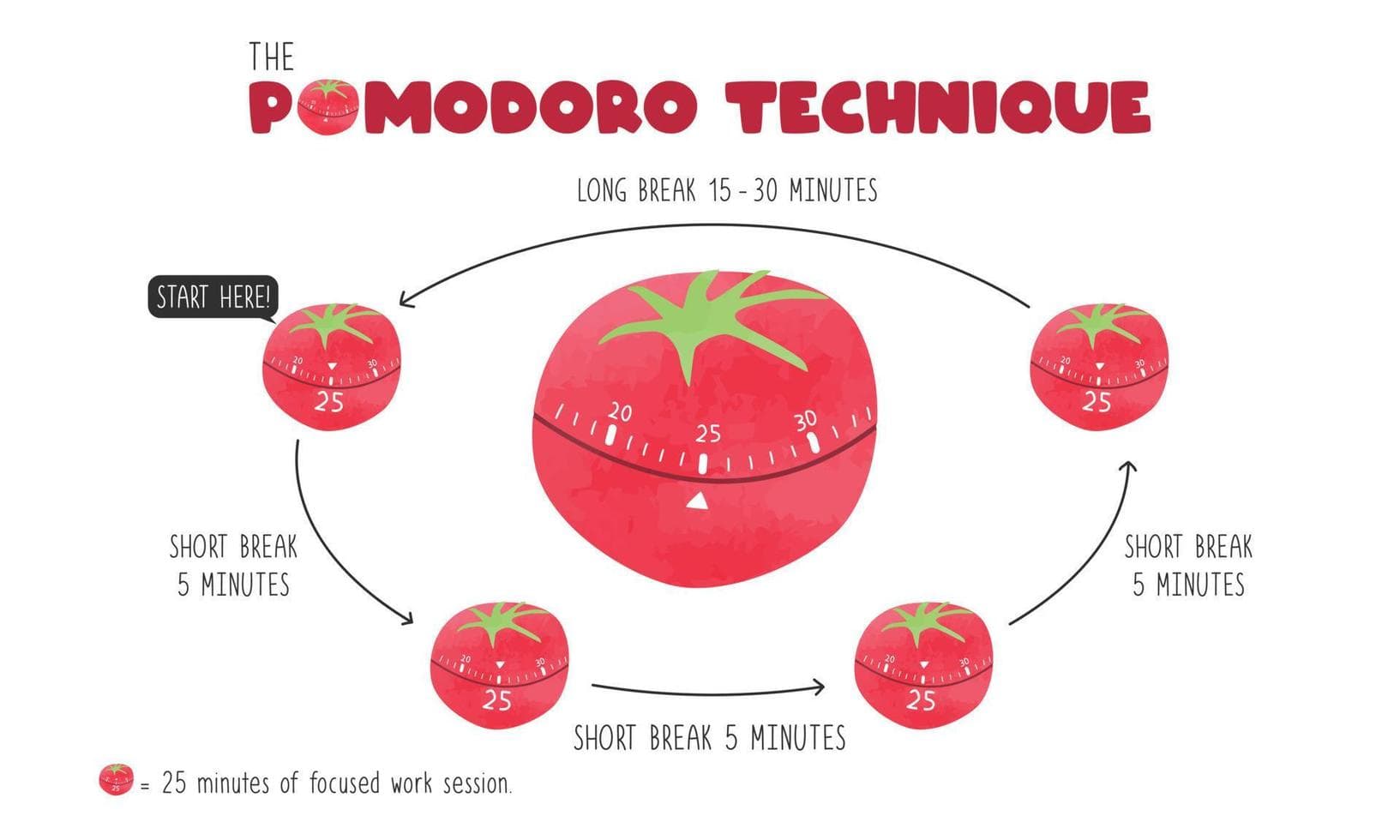
The Pomodoro Technique is a time management system that breaks your work into short, focused intervals — traditionally 25 minutes of work followed by a 5-minute break.
Each 25-minute block is called a “Pomodoro”, named after the tomato-shaped kitchen timer Cirillo used as a student (Pomodoro means “tomato” in Italian).
After completing four Pomodoros, you take a longer break of about 15–30 minutes.
| Pomodoro Structure | Duration | Purpose |
|---|---|---|
| Work Session (1 Pomodoro) | 25 minutes | Deep, distraction-free focus |
| Short Break | 5 minutes | Rest and reset your mind |
| Repeat x4 | — | Four Pomodoros make one full cycle |
| Long Break | 15–30 minutes | Recharge before next cycle |
The Science Behind Why It Works
The Pomodoro Technique is backed by neuroscience and behavioral psychology. Here’s why it’s so effective:
1. Leverages the Zeigarnik Effect
Your brain remembers unfinished tasks more than completed ones.
A 25-minute Pomodoro keeps your brain engaged because the task feels “in progress,” not endless.
2. Uses Time Pressure for Motivation
A ticking timer adds positive urgency. It tricks your brain into focusing because you have a defined window to complete the task.
3. Builds Flow States
The fixed time block helps you enter a flow state — a deep mental zone where distractions fade and performance peaks.
4. Prevents Burnout
The built-in breaks keep your brain from overloading. You recharge regularly instead of crashing after hours of forced focus.
Step-by-Step: How to Use the Pomodoro Technique
Step 1: Choose One Task
Pick a task you can realistically work on for 25 minutes.
Don’t multitask — the power is in focused attention.
Step 2: Set a Timer for 25 Minutes
Use a physical timer, your phone, or a Pomodoro app like Focus Booster or Forest.
Step 3: Work Without Distractions
No notifications, no multitasking, no email checks.
If a thought pops up, jot it down and return to your task.
Step 4: Take a 5-Minute Break
Walk, stretch, drink water — but don’t start another screen task.
Step 5: Repeat
After four Pomodoros, take a 15–30 minute long break.
Pro Tip: Don’t use breaks for scrolling social media — your brain needs genuine rest, not new stimulation.
Pomodoro Technique Example in Real Life
Let’s say you need to write a report that feels overwhelming.
You can break it down like this:
-
Pomodoro 1: Research & outline
-
Pomodoro 2: Write the introduction
-
Pomodoro 3: Write main sections
-
Pomodoro 4: Edit and polish
In just two focused hours, you’ve made measurable progress — with less stress, no multitasking, and no burnout.

The 80/20 of Productivity: Quality Over Quantity
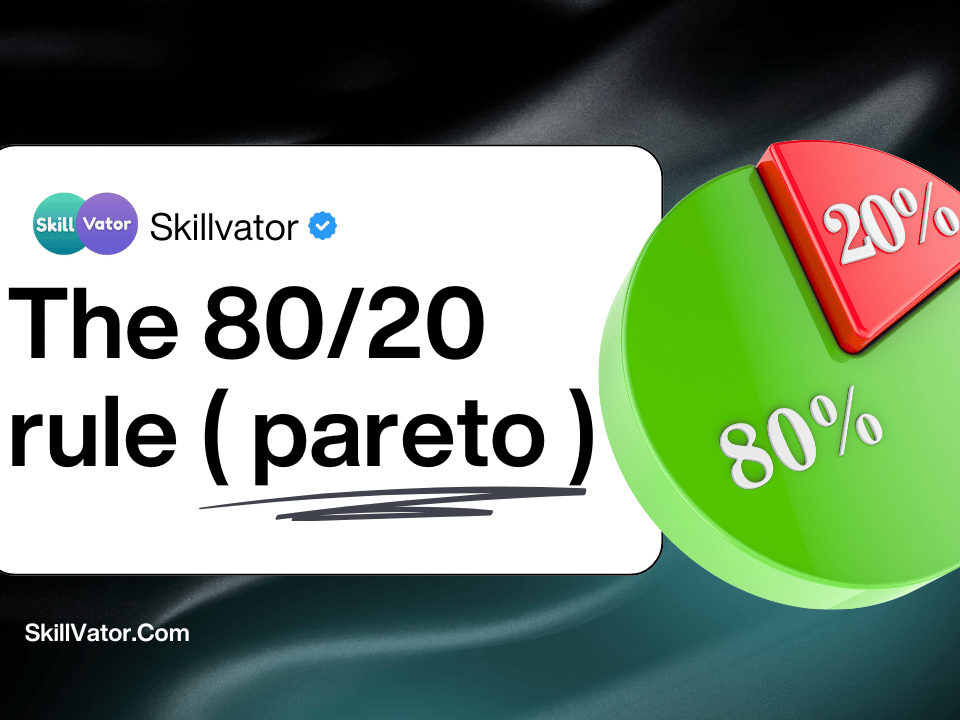
The Pomodoro Technique fits perfectly with the Pareto Principle (80/20 rule) — 80% of your results often come from 20% of your efforts.
By forcing yourself to focus for short bursts, you identify the 20% of tasks that truly matter — and eliminate hours of low-impact busyness.
At Skillvator, we encourage learners to track their Pomodoros to identify which activities create the biggest impact in their careers or businesses.
Tools and Apps to Power Up Your Pomodoros
| Tool / App | Platform | Unique Feature |
|---|---|---|
| Focus To-Do | Web, Mobile | Task management + Pomodoro timer |
| Forest | iOS, Android | Grow a virtual tree while focusing |
| Toggl Track | All | Combine Pomodoro timing with productivity analytics |
| Pomofocus.io | Web | Customizable timer and reports |
| Clockify | Web, Desktop | Track Pomodoros across projects |
Pro Tip: Choose one app and stick with it for at least 14 days — consistency builds habit strength.
Advanced Pomodoro Strategies
Once you master the basics, enhance your technique with these pro-level tweaks:
1. Adjust Pomodoro Lengths
Some tasks need more time. Try 50/10 Pomodoros (50 minutes focus, 10-minute break) for complex projects.
2. Combine with Time Blocking
Use Pomodoros inside larger time blocks — great for planners and busy professionals.
3. Stack Tasks
Group small, similar tasks into one Pomodoro (like replying to multiple emails).
4. Use Themed Days
Assign days to types of work — e.g., Mondays for planning, Tuesdays for deep creative tasks.
5. Review Daily
After every 8 Pomodoros, spend one reflecting: What worked? What distracted me?
Common Mistakes and How to Fix Them
| Mistake | Why It Hurts | How to Fix It |
|---|---|---|
| Checking your phone mid-Pomodoro | Breaks focus rhythm | Keep your phone out of reach |
| Tasks too vague | Hard to finish in 25 mins | Break tasks into smaller parts |
| Skipping breaks | Leads to mental fatigue | Take your 5 mins seriously |
| Over-scheduling Pomodoros | Unsustainable workload | Limit to 12–16 Pomodoros/day |
| Not tracking | No improvement insight | Log your sessions daily |
How the Pomodoro Technique Beats Procrastination
Procrastination isn’t about laziness — it’s about avoiding discomfort.
The Pomodoro Technique works because it lowers the barrier to starting.
You’re not committing to “finish the report”; you’re committing to just 25 minutes of effort.
Once you start, momentum builds motivation.
This psychological shift — from perfectionism to progress — is why the technique has helped millions of people overcome procrastination, anxiety, and creative blocks.
The Pomodoro Mindset: Discipline as a Daily Skill
At Skillvator, we teach that discipline isn’t built overnight — it’s practiced in micro-moments.
Each Pomodoro is a micro-promise you keep to yourself. Every time you honor that 25-minute commitment, your self-trust grows.
“Small wins build the confidence to tackle big goals.”
In a month, those 25-minute blocks become a habit. In a year, they shape your professional identity.
Integrate with Other Skillvator Productivity Guides
To make the Pomodoro Technique even more effective, connect it with other time and skill-building frameworks:
Together, these tools form a Skillvator Productivity Stack — a system for learning faster, working smarter, and growing consistently.
People Also Ask
Q1: How many Pomodoros should I do per day?
Most professionals complete 12–16 Pomodoros (6–8 hours) per day. Beginners can start with just 6–8.
Q2: What if I get interrupted mid-Pomodoro?
Pause the timer. Either deal with the interruption fully or restart a new Pomodoro afterward.
Q3: Can the Pomodoro Technique work for studying?
Absolutely. It’s a favorite among students for retaining focus during long study sessions.
Q4: Does it work for creative work?
Yes — it helps creatives balance flow and rest, preventing burnout and creative fatigue.
Q5: How do I stay consistent?
Track your daily Pomodoros, reflect weekly, and celebrate milestones — habit strength comes from repetition.
The Pomodoro Technique for Teams
Teams can use shared Pomodoro systems to:
-
Sync focus blocks (no meetings during Pomodoro hours)
-
Track collective productivity
-
Prevent burnout by enforcing breaks
-
Improve accountability and transparency
Pro Tip: Combine Pomodoro with daily stand-ups for maximum clarity and motivation.
15. Real-World Case: Skillvator Learner Transformation
One Skillvator student, Sara, a marketing manager, struggled with constant distractions.
After adopting the Pomodoro Technique for 30 days, she:
-
Increased focus time by 48%
-
Completed tasks 25% faster
-
Reported lower stress and higher satisfaction
Her secret? She treated each Pomodoro as a “mini win” — not a grind.
16. The Science of Rest: Why Breaks Matter
Breaks are not a waste of time — they’re a recharge system for your prefrontal cortex.
During short rests, your brain consolidates memories, processes ideas, and restores creative energy.
That’s why burnout is not from working too much — but from resting too little.
Your next breakthrough might come not from pushing harder, but from stepping back at the right moment.
17. The Pomodoro Challenge: 7 Days to Sharper Focus
Try this simple plan from Skillvator to reset your productivity habits:
| Day | Goal | Focus Duration |
|---|---|---|
| Day 1 | Try 4 Pomodoros | 2 hours total |
| Day 2 | Add reflection time | 5 Pomodoros |
| Day 3 | Track distractions | 6 Pomodoros |
| Day 4 | Identify best focus hours | 6 Pomodoros |
| Day 5 | Tackle a big project | 8 Pomodoros |
| Day 6 | Introduce longer breaks | 8 Pomodoros |
| Day 7 | Weekly review & insights | — |
By the end, you’ll have created a rhythm that balances deep work and rest — the core of sustainable success.
18. Conclusion: Your Time, Reclaimed
The Pomodoro Technique isn’t just a timer method — it’s a mindset shift.
It reminds you that focus is finite and precious.
When you choose to guard it, minute by minute, you reclaim control over your time, energy, and growth.
At Skillvator, I always tell learners:
“You don’t need more hours in the day — you need more intention in the hours you have.”
Start your first Pomodoro today. You’ll be amazed what 25 minutes of real focus can do.
Read More on Skillvator: