Discover the science of focus and how high performers train their attention to achieve peak productivity, deep work, and career growth. A complete guide by Skillvator.
Focus is no longer a personality trait.
It’s no longer a “natural talent.”
And it’s definitely not about willpower alone.
In today’s distraction-driven world, focus is a trainable skill—and it’s one of the strongest predictors of high performance, productivity, and long-term career success.
At Skillvator, we treat focus as a core skill, not a vague mindset. In this pillar guide, you’ll learn what focus really is, how attention works in the brain, why high performers protect it obsessively, and how you can train it deliberately.
This is not motivation.
This is science + systems + execution.
What Is Focus? (A Scientific Definition)
From a neuroscience perspective, focus is the brain’s ability to selectively allocate attention to one stimulus while suppressing others.
In simple terms:
Focus = choosing what to think about — and what to ignore
Your brain is constantly filtering information. Focus is the mechanism that decides:
-
What gets processed deeply
-
What gets ignored
-
What drives action
High performers don’t have better brains — they have better control over this filter.

Why Focus Is the Ultimate Performance Skill
Nearly every high-value outcome depends on focus:
-
Deep problem-solving
-
Learning complex skills
-
Strategic thinking
-
Creative output
-
High-quality execution
Without focus:
-
Productivity collapses
-
Learning becomes shallow
-
Work turns reactive
-
Burnout increases
This is why focus multiplies every other skill you have.
The Attention Economy: Why Focus Is Harder Than Ever
We don’t live in a neutral environment. We live in an attention economy.
Modern work conditions include:
-
Constant notifications
-
Open-plan offices
-
Multitasking expectations
-
Infinite information
Your brain didn’t evolve for this.
Research from Harvard shows that task-switching can reduce productivity by up to 40%. Yet most people switch tasks every few minutes without realizing it.
High performers win because they design environments and systems that protect attention.

The Science of Attention: How Your Brain Focuses
To train focus, you must understand how attention works.
The Three Types of Attention (Neuroscience-Based)
| Type of Attention | Description | Example |
|---|---|---|
| Selective Attention | Focusing on one thing | Writing while ignoring noise |
| Sustained Attention | Maintaining focus over time | Deep work session |
| Executive Attention | Resisting distractions | Not checking your phone |
High performers train all three, not just motivation.
Focus vs Concentration (Important Difference)
Many people confuse these.
-
Concentration = effortful control (short-term)
-
Focus = structured attention supported by systems
Concentration burns energy.
Focus conserves energy.
This is why systems like
👉 Time Blocking
and
👉 The Ivy Lee Method
work so well — they reduce decision load.
Why Willpower Fails (And Systems Win)
Willpower is a limited resource.
Studies in behavioral psychology show that:
-
Decision fatigue increases throughout the day
-
Self-control weakens under stress
-
Environment shapes behavior more than motivation
High performers don’t rely on willpower.
They rely on systems.
How High Performers Actually Train Focus
Let’s break down what high performers do differently — consistently.
1. They Reduce Input Before Increasing Output
High performers aggressively limit:
-
Notifications
-
Meetings
-
Low-value information
They understand a key truth:
You can’t focus deeply if your mind is constantly interrupted.
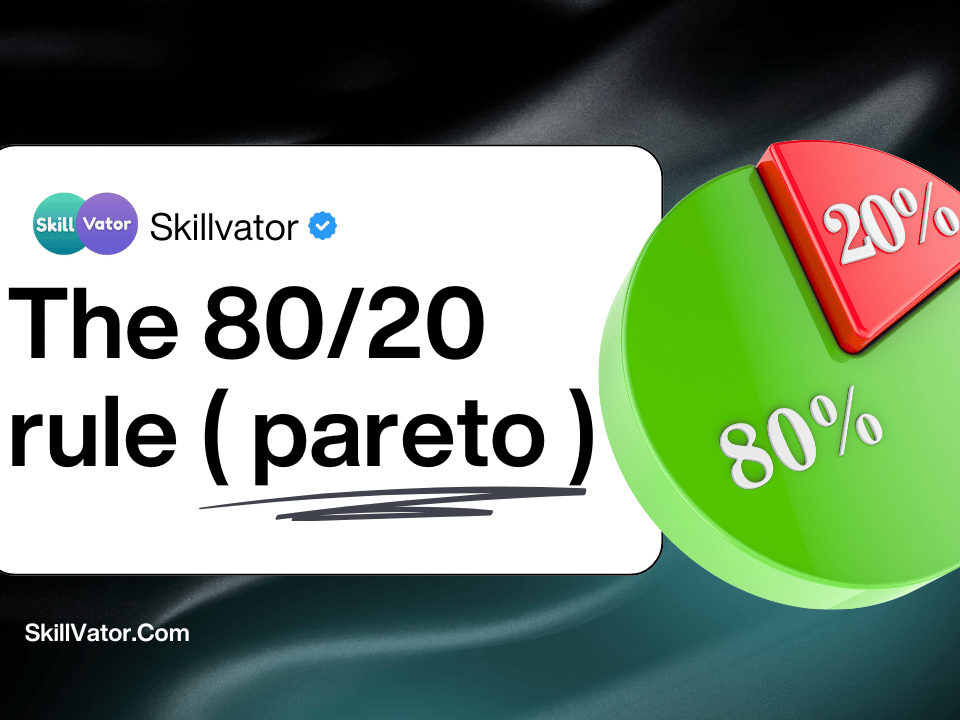
This aligns with the 80/20 Rule:
👉 The 80/20 Rule (Pareto Principle)
2. They Schedule Focus, Not Tasks
Instead of vague to-do lists, they schedule attention.
Using:
👉 Time Blocking
They protect:
-
Deep work hours
-
Thinking time
-
Learning sessions
What gets scheduled gets respected.
3. They Train Single-Tasking
Multitasking is a myth.
Neuroscience confirms:
-
The brain cannot focus on two demanding tasks at once
-
It switches rapidly, losing efficiency each time
High performers work on one thing at a time, deliberately.
This is reinforced by:
👉 The Ivy Lee Method
4. They Eliminate Decision Fatigue
Decision fatigue destroys focus.
That’s why high performers:
-
Plan the day the night before
-
Limit daily priorities
-
Use simple frameworks like:
Less deciding = more executing.
5. They Start Small to Build Momentum
Starting is the hardest part.
High performers use:
👉 The 2-Minute Rule
Momentum trains attention better than motivation ever will.
Focus Training Techniques That Actually Work
Technique 1: Deep Work Blocks
Coined by Cal Newport, deep work refers to uninterrupted, cognitively demanding work.
Best practices:
-
60–120 minute blocks
-
No notifications
-
Clear objective
Technique 2: Attention Residue Elimination
Switching tasks leaves “attention residue” behind.
Solution:
-
Finish one task fully
-
Take a short reset break
-
Then switch
Technique 3: Environment Design
Focus is contextual.
High performers design environments that:
-
Reduce visual clutter
-
Separate work and rest
-
Signal “focus mode” to the brain
Focus and Learning: Why Attention Drives Skill Development
Shallow attention leads to shallow skills.
Deep focus enables:
-
Faster learning
-
Better retention
-
Skill transfer to real work
This is why Skillvator treats focus as a foundational skill, not an optional habit.
Focus, Productivity, and Career Growth (The Hidden Link)
Career growth is not about effort alone.
In most careers:
-
20% of focused work → 80% of visible results
-
Focused output gets recognized
-
Shallow busyness gets ignored
This connects directly with:
👉 OKRs (Objectives & Key Results)
Focus ensures your effort aligns with outcomes.
Common Focus Killers to Eliminate Immediately
| Focus Killer | Why It Hurts |
|---|---|
| Notifications | Constant attention switching |
| Multitasking | Reduced performance |
| Open-ended to-do lists | Mental overload |
| Context switching | Cognitive fatigue |
| Poor sleep | Reduced executive control |
Skillvator Focus Framework (Simple & Practical)
At Skillvator, we teach focus using a simple model:
-
Clarify priorities (what matters)
-
Design time (when to focus)
-
Protect attention (remove noise)
-
Train daily (small, repeatable actions)
Focus improves through deliberate practice, not hacks.
Frequently Asked Questions (FAQ)
What is focus in productivity?
Focus is the ability to direct attention intentionally toward one task while ignoring distractions.
Can focus be trained?
Yes. Focus is a trainable cognitive skill supported by neuroscience and behavioral research.
How long can humans focus?
Most people can focus deeply for 60–90 minutes before needing a break.
Is multitasking bad for focus?
Yes. Multitasking reduces efficiency and increases cognitive load.
What’s the fastest way to improve focus?
Reduce distractions, plan priorities, and start with small focus sessions.
Trusted Sources & Research
Harvard Business Review – Attention & Productivity
Cal Newport – Deep Work Research
American Psychological Association – Multitasking
Final Thoughts: Focus Is the Skill of the Future
In a world that profits from distraction, focus is a competitive advantage.
High performers are not more motivated.
They are more intentional with attention.
By understanding the science of focus and training it deliberately, you can:
-
Work smarter, not harder
-
Learn faster
-
Produce higher-quality results
-
Accelerate career growth
At Skillvator, we believe focus is not optional — it’s foundational

This article explains focus in a very practical way. I liked how the science was broken down into simple habits that anyone can apply.
Does improving focus through these methods also help with long-term memory and learning retention?
The connection between distractions and brain performance was eye-opening. Great read for anyone struggling with concentration.