



Learn how the 80/20 Rule (Pareto Principle) helps you work smarter, not harder, by focusing on the few actions that drive the biggest results. A complete guide by Skillvator.
What if 80% of your results came from just 20% of your efforts?
What if most of your stress, long hours, and burnout came not from lack of effort—but from focusing on the wrong things?
This is the insight behind one of the most powerful mental models ever discovered:
👉 The 80/20 Rule, also known as the Pareto Principle
At Skillvator, we teach the 80/20 Rule as a core productivity and career-growth principle. When applied correctly, it can dramatically increase results while reducing effort, time, and overwhelm.
In this in-depth guide, you’ll learn what the 80/20 Rule is, why it works, how to apply it across work and life, and how to use it with modern productivity systems.
What Is the 80/20 Rule (Pareto Principle)?
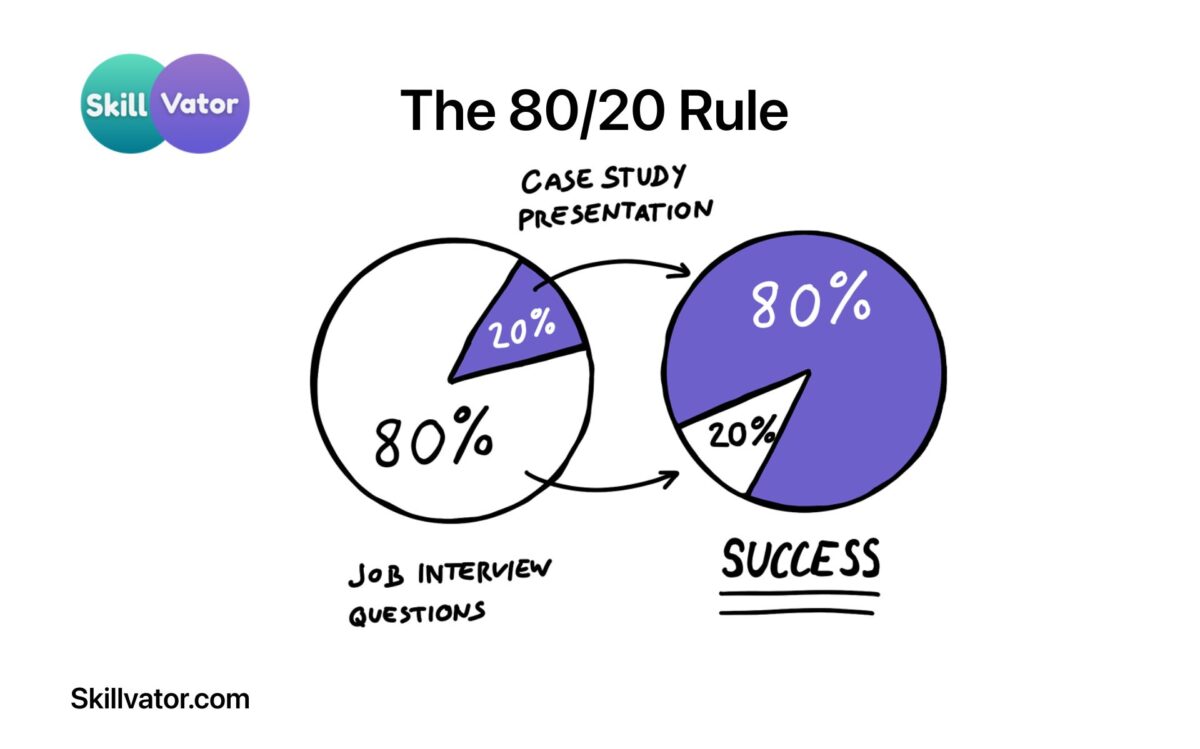
The 80/20 Rule, or Pareto Principle, states that:
Roughly 80% of outcomes come from 20% of causes.
This imbalance appears everywhere:
-
80% of revenue comes from 20% of customers
-
80% of problems come from 20% of causes
-
80% of results come from 20% of efforts
The numbers don’t have to be exact—the principle is about disproportionate impact.

A Brief History of the Pareto Principle
The rule was discovered by Vilfredo Pareto, an Italian economist, in the late 19th century.
Pareto observed that:
-
80% of land in Italy was owned by 20% of the population
Later, researchers realized this pattern repeated across:
-
Economics
-
Business
-
Productivity
-
Time management
-
Personal performance
Today, the 80/20 Rule is one of the most widely used principles in business strategy and productivity.
Best For: Who Should Use the 80/20 Rule?
The 80/20 Rule is ideal for:
-
Professionals overwhelmed by workload
-
Entrepreneurs and founders
-
Students and knowledge workers
-
Managers and team leaders
-
Anyone who feels busy but underperforming
If you want maximum results with minimum wasted effort, this rule is essential.
Core Idea of the 80/20 Rule: Focus on What Truly Matters
The core philosophy is simple:
Not all tasks are equal.
Most people assume:
-
More work = more results
The 80/20 Rule reveals the truth:
-
Better focus = better results
Success comes from identifying and doubling down on the vital few, not the trivial many.

Why the 80/20 Rule Actually Works
The 80/20 Rule works because it aligns with reality, not idealism.
1. It Eliminates Low-Value Work
Most tasks contribute little to real outcomes. The 80/20 Rule helps you identify what to ignore, delegate, or eliminate.
2. It Increases Strategic Thinking
Instead of reacting to tasks, you ask:
-
What activities create the biggest impact?
-
What can I stop doing?
3. It Reduces Burnout
By cutting unnecessary effort, you:
-
Work fewer hours
-
Reduce stress
-
Preserve energy for meaningful work
4. It Improves Decision-Making
When everything feels important, nothing is. The 80/20 Rule restores clarity.
80/20 Rule vs Traditional Productivity Thinking
Traditional productivity often rewards busyness.
| Traditional Thinking | 80/20 Rule |
|---|---|
| Do more | Do what matters |
| Treat all tasks equally | Prioritize impact |
| Maximize hours | Maximize leverage |
| Work harder | Work smarter |
How to Apply the 80/20 Rule in Daily Work (Step by Step)
Step 1: Identify Your Desired Results
Start by defining:
-
What outcomes matter most?
-
What does success look like?
If you use
👉 OKRs (Objectives & Key Results)
your objectives provide a perfect starting point.
Step 2: List Your Activities
Write down:
-
Daily tasks
-
Weekly responsibilities
-
Recurring commitments
Visibility is critical.
Step 3: Identify the High-Impact 20%
Ask:
-
Which tasks directly drive results?
-
Which activities create the biggest progress?
These are your 20% tasks.
Step 4: Eliminate, Delegate, or Minimize the Rest
Not everything deserves your attention.
Low-impact tasks should be:
-
Eliminated
-
Automated
-
Delegated
-
Batched
Step 5: Double Down on the Vital Few
Protect time for high-impact work using:
👉 Time Blocking
Read The full guide on
10 Productivity Frameworks That Actually Work (Eisenhower, Pomodoro, etc.)
80/20 Rule in Productivity (Practical Examples)
Example 1: Work Tasks
-
20% of tasks → 80% of results
-
Identify deep work activities and protect them
Example 2: Learning & Skills
-
20% of skills → 80% of career growth
-
Focus on skills with real-world leverage
👉 Skillvator focuses on exactly these skills
Example 3: Meetings
-
20% of meetings → 80% of value
-
Decline or shorten the rest
80/20 Rule in Career Growth
In careers:
-
20% of efforts often lead to promotions
-
20% of skills lead to most income growth
Focus on:
-
Communication
-
Problem-solving
-
Strategic thinking
-
Execution
This aligns perfectly with Skillvator’s career-focused learning philosophy.
80/20 Rule and Other Productivity Frameworks
The 80/20 Rule works best when paired with execution systems.
80/20 Rule + Ivy Lee Method
-
80/20 identifies what matters
-
Ivy Lee ensures you do it first
80/20 Rule + 1-3-5 Rule
-
80/20 chooses the big task
-
1-3-5 structures the day
80/20 Rule + GTD
-
GTD captures everything
-
80/20 filters what matters
80/20 Rule Summary Table
| Area | 20% Focus | 80% Result |
|---|---|---|
| Tasks | High-impact work | Most output |
| Skills | Leverage skills | Career growth |
| Clients | Top customers | Revenue |
| Habits | Keystone habits | Life improvement |
Common Mistakes When Using the 80/20 Rule
Avoid These Errors:
-
Treating it as an excuse to be lazy
-
Ignoring responsibilities entirely
-
Expecting exact 80/20 ratios
-
Not reviewing priorities regularly
The rule is a guiding principle, not a rigid formula.
Skillvator Tip: Ask This One Question Daily 🎯
Skillvator Tip:
Ask yourself every morning:
“What 20% of my work today will create 80% of the results?”
This single question can reshape your entire day.
Frequently Asked Questions (FAQ)
What is the 80/20 Rule in productivity?
The 80/20 Rule states that a small number of actions create most results, helping you focus on high-impact work.
Is the Pareto Principle scientifically proven?
It’s an observed pattern, not a law—but it appears consistently across economics, business, and productivity.
Can I apply the 80/20 Rule daily?
Yes. It works best when reviewed daily or weekly.
Does the 80/20 Rule apply to learning?
Absolutely. A few core skills usually drive most career success.
Is the 80/20 Rule better than to-do lists?
Yes, because it prioritizes impact, not volume.
Trusted Sources & References
Harvard Business Review – Pareto Principle
Investopedia – Pareto Principle Explained
Final Thoughts: Less Effort, Better Results
The 80/20 Rule (Pareto Principle) teaches a timeless truth:
Success is not about doing everything—it’s about doing the right things.
By focusing on the few actions that matter most, you can:
-
Achieve more with less effort
-
Reduce stress and burnout
-
Improve productivity
-
Accelerate career growth
At Skillvator, we believe mastering the 80/20 Rule is essential for anyone serious about working smarter, not harder.






I love how this article shows real-life examples of the 80/20 rule. It really changed how I prioritize my daily tasks.
Can this principle be applied effectively to learning new skills, or does it work better for productivity only?
Simple, clear, and very actionable. This is one of the best explanations of the Pareto Principle I’ve read.