

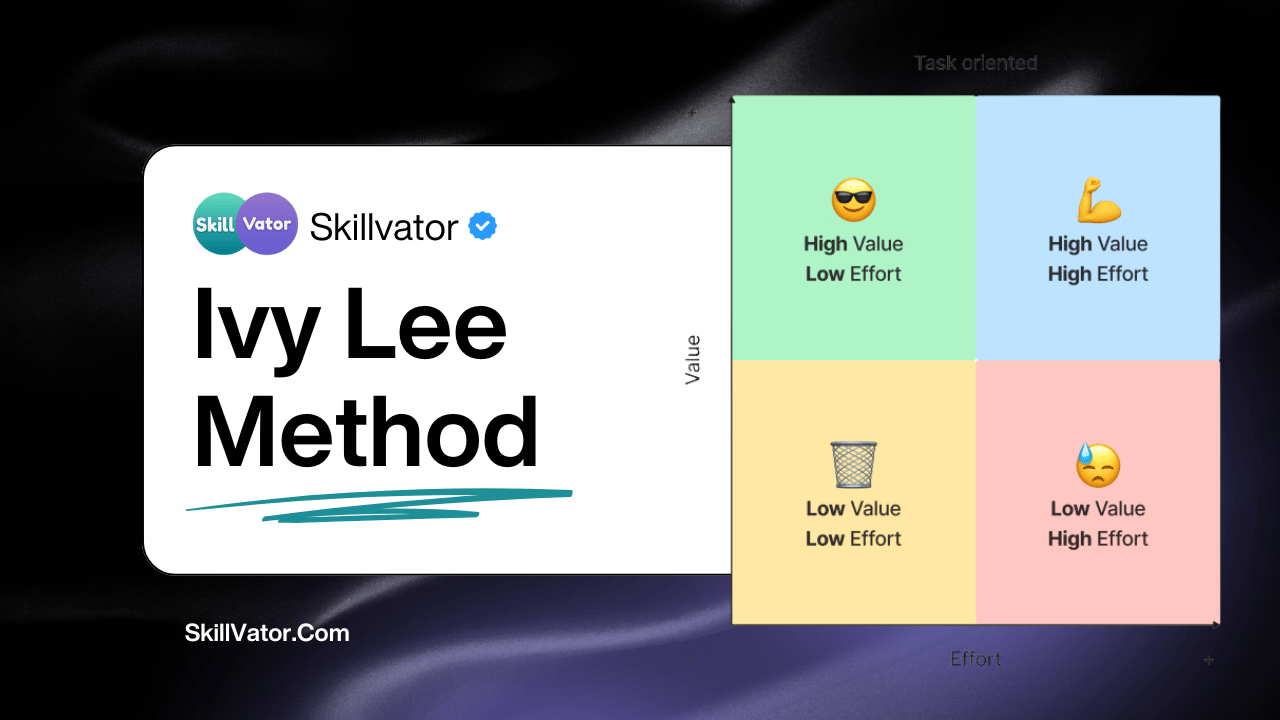
Learn how the Ivy Lee Method helps overthinkers prioritize tasks, eliminate decision fatigue, and achieve laser focus. A complete Ivy Lee productivity guide by Skillvator.
In a world overflowing with productivity apps, complex frameworks, and endless to-do lists, one of the most effective productivity methods ever created uses just a pen, paper, and six tasks.
No dashboards.
No automation.
No complicated systems.
This is the Ivy Lee Method—a simple yet powerful prioritization technique that has helped leaders, executives, and professionals stay focused for over a century.
At Skillvator, we believe that simplicity beats complexity, especially for people who tend to overthink. In this in-depth guide, you’ll learn what the Ivy Lee Method is, how it works, why it’s so effective, and how to apply it to modern work and career growth.
What Is the Ivy Lee Method?
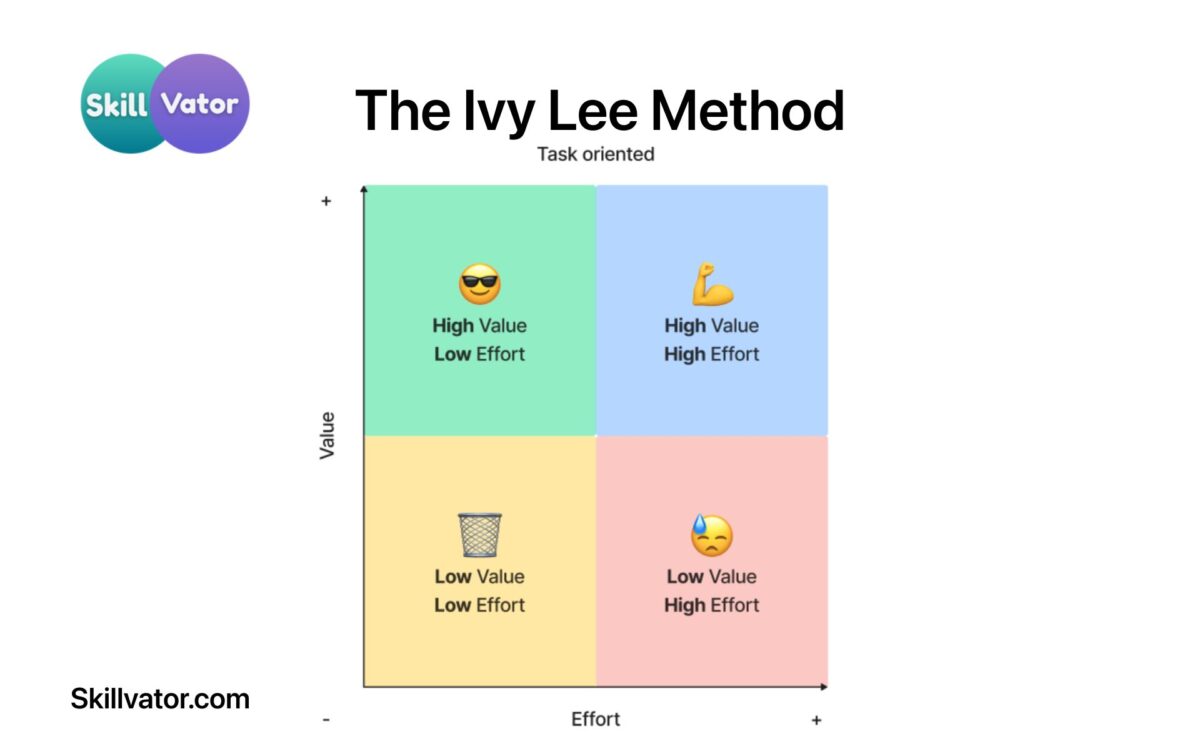
The Ivy Lee Method is a daily prioritization system created in 1918 by productivity consultant Ivy Lee, one of the pioneers of modern management consulting.
The method is built on a simple daily routine:
-
Write down six important tasks for tomorrow
-
Rank them by true importance
-
Start with task #1 and do not move on until it’s complete
-
Repeat the process every day
That’s it.
Yet despite its simplicity, the Ivy Lee Method has stood the test of time—and continues to outperform more complex productivity systems.

Best For: Who Should Use the Ivy Lee Method?
The Ivy Lee Method is especially effective for:
-
Overthinkers who struggle with clarity
-
Professionals overwhelmed by long to-do lists
-
Knowledge workers and managers
-
Entrepreneurs juggling many priorities
-
Anyone suffering from decision fatigue
If you often spend more time deciding what to work on than actually working, this method is built for you.

Core Idea of the Ivy Lee Method: Simplicity Beats Complexity
The philosophy behind the Ivy Lee Method is powerful:
Productivity isn’t about doing more—it’s about doing the right thing first.
Most productivity struggles come from:
-
Too many choices
-
Too many priorities
-
Too much mental noise
The Ivy Lee Method removes all of that by forcing clarity, focus, and execution.

A Brief History: How the Ivy Lee Method Was Born
In 1918, Ivy Lee was hired by Charles M. Schwab, then president of Bethlehem Steel, to improve executive productivity.
Lee proposed a simple experiment:
-
He asked executives to follow his six-task method
-
He told Schwab to pay him only if it worked
After three months, Schwab reportedly paid Lee the equivalent of $400,000 in today’s money, calling it the most profitable advice he’d ever received.
That alone speaks volumes about the method’s effectiveness.
How the Ivy Lee Method Works (Step by Step)
Let’s break down the Ivy Lee Method in detail.
Step 1: Write Down Six Important Tasks for Tomorrow
At the end of each workday, write down the six most important tasks you need to complete tomorrow.
Rules:
-
No more than six
-
Tasks must be meaningful
-
Focus on impact, not urgency
This step forces intentional planning rather than reactive work.
Step 2: Rank Tasks by Importance
Once you’ve listed six tasks, rank them from most important to least important.
Ask yourself:
-
Which task would make the biggest difference?
-
Which task moves my goals forward the most?
If you use
👉 OKRs (Objectives & Key Results)your top tasks should directly support your objectives.
Step 3: Start With Task #1 — No Exceptions
The next day, begin with Task #1 and work on it until it’s complete.
No multitasking.
No jumping ahead.
No distractions.
Only after finishing task #1 do you move to task #2.
This is where the magic happens.
Step 4: Repeat Daily
At the end of the day:
-
Move unfinished tasks to the next day’s list
-
Re-rank them
-
Add new tasks if needed
Over time, this creates a powerful habit of focused execution.
Ivy Lee Method Summary Table
| Step | Action | Benefit |
|---|---|---|
| List | Write 6 tasks | Prevents overload |
| Rank | Order by importance | Forces clarity |
| Focus | One task at a time | Eliminates multitasking |
| Repeat | Daily practice | Builds consistency |
Why the Ivy Lee Method Actually Works
The Ivy Lee Method works because it addresses core psychological barriers to productivity.
1. It Eliminates Decision Fatigue
Every decision consumes mental energy. By deciding what to work on the day before, you preserve energy for execution.
2. It Creates Laser Focus
Working on one task at a time eliminates context switching—a major productivity killer.
3. It Encourages Deep Work
The method naturally supports deep, uninterrupted work, a concept popularized by Cal Newport.
4. It Builds Momentum
Completing high-priority tasks early creates motivation and confidence for the rest of the day.
Ivy Lee Method vs Other Productivity Frameworks
If you’ve read
👉 10 Productivity Frameworks That Actually Work
you’ll notice that the Ivy Lee Method stands out for its extreme simplicity.
| Framework | Best Use Case |
|---|---|
| Ivy Lee Method | Prioritization & focus |
| GTD | Complex task management |
| PARA Method | Digital organization |
| Time Blocking | Daily execution planning |
The Ivy Lee Method works especially well as a daily execution layer.
How to Combine the Ivy Lee Method with Other Systems
The Ivy Lee Method shines when paired with complementary frameworks.
Ivy Lee + GTD
-
GTD captures all tasks
-
Ivy Lee selects the top six that matter most
Ivy Lee + PARA
-
PARA organizes information
-
Ivy Lee determines what to act on today
Ivy Lee + Time Blocking
-
Ivy Lee defines priorities
-
Time blocking schedules them into your day
Common Mistakes to Avoid with the Ivy Lee Method
Despite its simplicity, people often misuse the method.
Avoid These Errors:
-
Listing more than six tasks
-
Choosing easy tasks over important ones
-
Ignoring unfinished tasks
-
Constantly reshuffling priorities
Discipline is what makes the Ivy Lee Method powerful.
Who Should Not Use the Ivy Lee Method?
The Ivy Lee Method may not be ideal if:
-
Your work requires constant emergency response
-
You have no control over your schedule
-
You need detailed project tracking
In such cases, use it alongside other systems rather than alone.
Skillvator Tip: Use Ivy Lee with Your Morning Coffee ☕
Skillvator Tip:
Review your Ivy Lee list with your morning coffee.
This ritual creates clarity, calm, and focus before distractions begin.
Small habits like this dramatically increase consistency.
Modern Tools for the Ivy Lee Method
You don’t need tools, but these work well:
-
Notebook or sticky notes
-
Apple Notes / Google Keep
-
Notion (simple list only)
-
Todoist (manual prioritization)
Avoid overengineering—the method thrives on simplicity.
Frequently Asked Questions (FAQ)
What is the Ivy Lee Method?
The Ivy Lee Method is a simple daily prioritization system that focuses on completing six ranked tasks, one at a time.
Why only six tasks?
Six is enough to make progress without overwhelming your focus or energy.
Is the Ivy Lee Method good for overthinkers?
Yes. It’s one of the best productivity methods for overthinkers because it removes excessive choices.
Can I use the Ivy Lee Method with a to-do app?
Yes, but keep it minimal. The method works best when distractions are reduced.
How long should I use the Ivy Lee Method?
Many people use it for years. Its simplicity makes it sustainable long-term.
Trusted Sources & References
Final Thoughts: Why the Ivy Lee Method Still Matters Today
More than 100 years later, the Ivy Lee Method remains relevant because human attention hasn’t changed.
We still struggle with:
-
Too many choices
-
Too many priorities
-
Too many distractions
The Ivy Lee Method cuts through all of that with one principle:
Do the most important thing first.
At Skillvator, we believe mastering simple systems like the Ivy Lee Method is essential for true productivity and long-term career growth.


I appreciate how straightforward this method is. Planning just six tasks makes productivity feel less overwhelming.
This article helped me understand why focusing on fewer tasks actually leads to better results.